
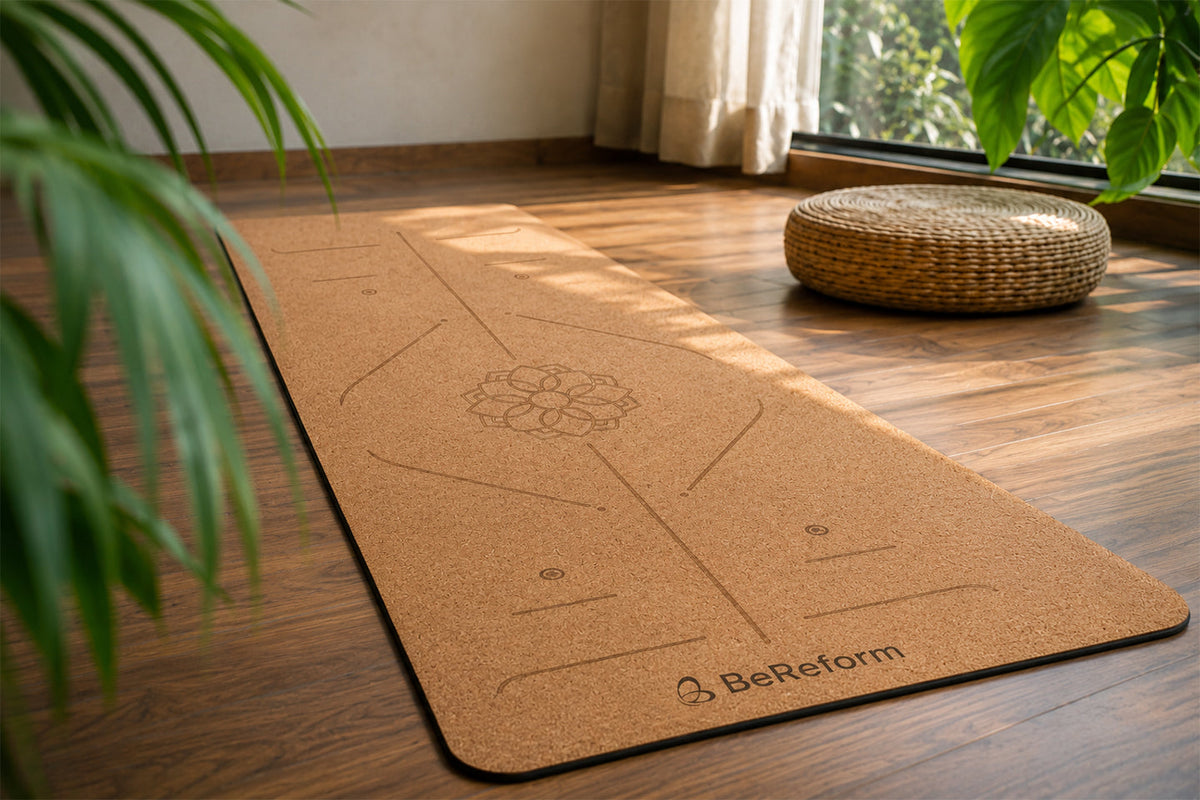
Cork yoga mats offer superior grip, natural antimicrobial properties, and a truly sustainable choice for your practice. They're an excellent upgrade for both performance and environmental consciousness, helping you make a mindful decision for your body and the planet.
Why Choose an Eco-Friendly Cork Yoga Mat for Your Practice?
Opting for an eco-friendly cork yoga mat provides a naturally superior grip that often improves with sweat, inherent hygiene benefits, and a clear conscience about your environmental impact. Unlike synthetic alternatives, cork delivers a unique tactile experience that many practitioners find deeply grounding.
Cork's natural texture offers remarkable traction, which is a major benefit for stability in various poses. Some practitioners, including those who do power yoga, report never finding their cork mat slippery even when dry. For hotter environments or those who prefer an extra sticky surface, a light spritz of water can enhance the grip even further. The natural cushioning also provides comfort, with many users appreciating the support for joints like the knees during practice.
Beyond grip, cork naturally resists bacteria and odors, keeping your mat fresh with minimal cleaning. This makes it an ideal choice for regular use, especially if you prioritize a clean and healthy practice space. For a mat designed with these benefits in mind, consider the bereform Eco-Friendly Cork Yoga/Pilates Mat, crafted from 100% natural cork and rubber for both comfort and performance.
Bottom Line
Cork yoga mats offer excellent non-slip performance that improves with moisture, natural cleanliness, and comfortable cushioning, making them a top choice for a hygienic and stable practice.
How Does Cork Compare to Other Common Yoga Mat Materials?
Cork stands out from synthetic and even other natural materials due to its exceptional sustainability, unique grip properties, and natural antimicrobial benefits. When comparing options, cork offers a compelling balance of performance and ecological responsibility.
| Feature | Cork (e.g., bereform) | Natural Rubber | PVC (Polyvinyl Chloride) | TPE (Thermoplastic Elastomer) |
|---|---|---|---|---|
| Sustainability | Highly renewable, biodegradable, no trees cut down | Renewable, biodegradable, some processing involved | Non-renewable, not biodegradable, potential toxins | Often recyclable, less durable than rubber/cork |
| Grip (Wet/Dry) | Excellent, improves with sweat; not slippery when dry for many | Very good, especially when dry | Good, but can become slippery when wet | Good, but less durable over time |
| Antimicrobial | Naturally antimicrobial, odor-resistant | Some natural resistance, but less than cork | Not inherently antimicrobial, can harbor bacteria | Not inherently antimicrobial |
| Durability | Very durable with proper care, long-lasting | Very durable, excellent longevity | Varies, can break down over time | Moderate, tends to wear out faster |
| Cushioning | Good, firm support | Excellent, soft and supportive | Varies by thickness, can be dense | Good, lighter feel |
Is an Eco-Friendly Cork Yoga Mat Really Sustainable?
Yes, an eco-friendly cork yoga mat is highly sustainable because cork is harvested from the bark of cork oak trees without cutting them down, making it a renewable resource that benefits local ecosystems. The process supports biodiversity and prevents deforestation, aligning with a commitment to overall environmental responsibility.
Cork harvesting is a traditional practice that helps maintain cork oak forests, which are vital habitats and significant carbon sinks. Since only the bark is removed, the tree continues to grow and absorb CO2 for many decades. Furthermore, cork is a natural material that is fully biodegradable at the end of its life, returning to the earth without contributing to landfill waste. Many shoppers prioritize a truly sustainable choice over other mat materials, and cork delivers on that front. For more insights on sustainable equipment, you might consider our comparison of Steel vs. Wooden Pilates Reformers.
Bottom Line
Cork mats offer a strong sustainability profile due to renewable harvesting, biodegradability, and positive environmental impact, setting them apart from most other mat materials.
What Should You Look For When Buying a Cork Yoga Mat?
When selecting a cork yoga mat, prioritize factors like the thickness for cushioning, the quality of the natural rubber backing for stability, and the overall mat dimensions to suit your practice space and height. These elements contribute directly to your comfort, safety, and the mat's longevity.
Consider the mat's thickness; a thicker mat (like 4mm-5mm) offers more cushioning for sensitive joints, a point often praised by users with older knees who appreciate the added comfort. Examine the backing material; natural rubber provides excellent grip on the floor, preventing the mat from sliding during dynamic movements. Durability is also key; some cork mats are known to last for years of daily use, so look for quality construction. Ensure the mat's length and width are appropriate for your body and practice style.
A high-quality eco friendly cork yoga mat, such as the bereform Eco-Friendly Cork Yoga/Pilates Mat, combines a responsive cork surface with a sturdy natural rubber base. This provides the necessary grip, support, and stability for various exercises, from gentle stretches to power yoga. Its natural composition also ensures it remains free from harmful chemicals, aligning with a holistic approach to wellness.
Bottom Line
Focus on mat thickness, the quality of the rubber backing, and overall size to ensure your cork mat offers optimal comfort, stability, and durability for your specific practice needs.
Shop Eco-Friendly Cork Yoga/Pilates Mat Now
Frequently Asked Questions
Are cork yoga mats good for all types of yoga?
Yes, cork yoga mats are highly versatile and suitable for most yoga styles, including Vinyasa, Hatha, Ashtanga, and even hot yoga. Their grip often improves with moisture, making them particularly effective for practices where you sweat.
Do cork mats get slippery when dry?
Many users report that cork mats are not slippery when dry, offering consistent grip. However, if you find your mat a bit slick initially or prefer extra traction, a light mist of water can be sprayed on the surface before or during your practice to activate the cork's natural grip.
How do I clean and care for my cork yoga mat?
To clean a cork mat, simply wipe it down with a damp cloth after each use. For a deeper clean, use a natural mat cleaner or a mild soap solution, then wipe dry. Avoid soaking the mat or using harsh chemicals, which can damage the cork.
What is the lifespan of an eco-friendly cork yoga mat?
With proper care, an eco-friendly cork yoga mat can be very durable and last for many years, often exceeding the lifespan of synthetic mats. Its natural resilience and high-quality construction contribute to its longevity, even with frequent use.
Can cork yoga mats be used for Pilates?
Absolutely. Cork yoga mats provide excellent stability and cushioning, making them perfectly suitable for Pilates practice. The non-slip surface helps maintain proper form and control during precise Pilates movements.