
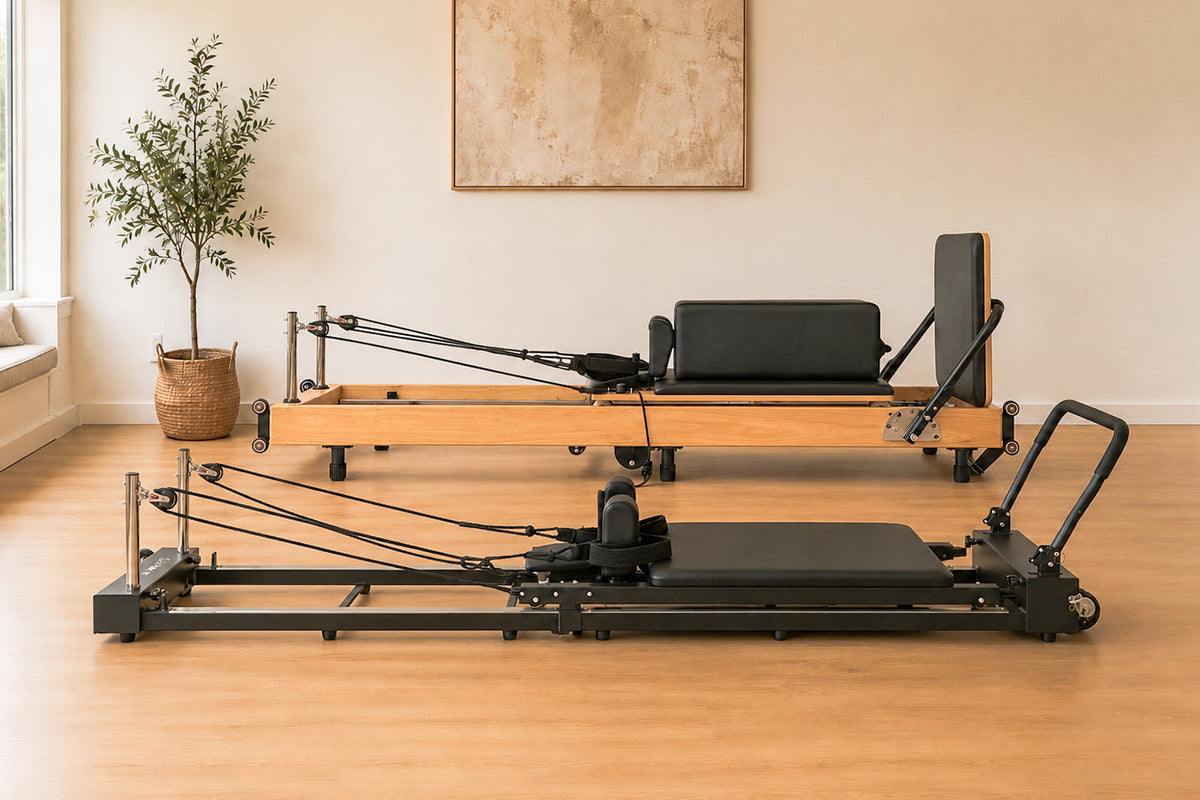
For serious home Pilates practitioners, choosing between a steel or wooden reformer impacts durability, portability, and your practice space. Steel reformers, like the Core Steel Foldable Pilates Reformer, often provide modern functionality and easy storage, while wooden models offer a classic, robust studio feel.
What's the Core Difference Between Steel and Wooden Pilates Reformers?
The primary difference between steel and wooden Pilates reformers lies in their construction materials, which dictate their weight, design, durability, and aesthetic. Steel reformers feature a metal frame, offering a sleek, often lighter profile designed for portability and folding for easy storage. In contrast, wooden reformers are crafted from solid wood, providing a traditional, heavier presence that many associate with a classic Pilates studio experience. Modern steel reformers, particularly foldable ones, are engineered to deliver studio-grade stability and smooth operation, addressing concerns about less substantial compact options. While some might worry that an accessible price means a 'junky reformer,' well-designed steel models like the Core Steel Foldable Pilates Reformer prove that performance doesn't have to be sacrificed for an apartment-friendly design. They offer precision movement and customizable resistance without compromising on quality or feel.
Bottom Line: Steel reformers offer modern versatility and portability, often with space-saving features, while wooden reformers deliver a classic, sturdy aesthetic ideal for dedicated spaces.
How Do Steel and Wooden Reformers Compare in Durability and Lifespan?
Both steel and wooden Pilates reformers are designed for durability, but their longevity and maintenance requirements differ based on their material. Steel frames are exceptionally resistant to warping, corrosion, and changes due to humidity, making them very low maintenance and incredibly long-lasting. They can withstand frequent use without showing significant wear. Wooden reformers, typically made from high-quality hardwoods like maple or oak, are also very durable, offering robust stability. However, wood can be susceptible to dents, scratches, or minor warping if not properly cared for or exposed to extreme humidity. While built to last for decades, wooden reformers may require more attention to maintenance to preserve their aesthetic and structural integrity over time. Ultimately, a well-constructed reformer of either material will offer years of reliable practice.
Bottom Line: Steel reformers offer superior resistance to environmental factors and typically require less maintenance, while wooden reformers are robust but may need more care to maintain their classic appearance.
Which Reformer Material is Better for Small Home Spaces?
For individuals with limited living space, steel reformers are generally the superior choice, especially models designed for folding and compact storage. Their lighter weight and ability to fold flat or stand upright make them ideal for apartment living or multi-purpose rooms where equipment needs to be stored away after use. The Core Steel Foldable Pilates Reformer, for instance, is specifically engineered with a lightweight steel frame and a compact fold design, allowing it to store upright against a wall in seconds. This directly addresses the common need for 'foldable pilates reformer reviews for small spaces,' providing a powerful solution for those who want a studio experience without sacrificing their living area. Wooden reformers, while sturdy, are typically heavier and have a larger, fixed footprint, making them less practical for small homes or anyone needing to regularly move their equipment. They require a dedicated space, which isn't always feasible in urban environments. Shoppers looking for the 'best affordable steel pilates reformer for apartment living' will often find that steel models offer both the performance they need and the space-saving functionality they crave.
Bottom Line: Steel reformers, particularly foldable models, are significantly better for small home spaces due to their lighter weight and ability to be easily stored away.
Do Steel and Wooden Pilates Reformers Offer the Same Performance?
Both steel and wooden Pilates reformers can absolutely deliver studio-grade performance, enabling a full range of Pilates exercises with precision and effectiveness. The key performance elements—carriage smoothness, spring resistance, and overall stability—are dependent on the reformer's engineering and build quality, not just the frame material. High-quality steel reformers, like the Core Steel Foldable Pilates Reformer, feature a smooth-glide carriage and adjustable resistance springs that replicate the feel and challenge of a professional studio machine. Users often report being 'pleasantly surprised by the build quality,' noting that well-designed compact models feel 'much closer to a studio reformer in terms of carriage smoothness and spring tension than most compact models they’ve tried.' While the 'feel' can differ slightly due to the inherent rigidity and vibration dampening properties of each material, both provide a stable platform for effective workouts. Some advanced practitioners might find specific exercises, like pulling straps while lying prone on a long box, are affected by the reformer's height. However, for the vast majority of exercises and home practitioners, both steel and wooden reformers offer exceptional performance capabilities. The choice often comes down to personal preference for aesthetic and space management rather than a compromise on workout quality.
Bottom Line: Both steel and wooden reformers can offer excellent performance, with high-quality engineering being more critical than the material itself for a studio-like experience.
Steel vs. Wood Pilates Reformer: A Feature Comparison Table
When weighing your options, consider how each material performs across key features.
| Feature | Steel Reformers | Wooden Reformers | Best For |
|---|---|---|---|
| Durability | High; resistant to warping, corrosion, low maintenance. | High; robust, classic craftsmanship, can dent/scratch. | Steel for maximum resilience, Wood for traditional robustness. |
| Portability | Excellent; often lighter and foldable for easy storage/movement. | Limited; heavier, larger footprint, usually fixed. | Steel for small spaces or multi-use rooms. |
| Aesthetics | Sleek, modern, minimalist. | Traditional, classic, furniture-like appeal. | Steel for contemporary homes, Wood for traditional studio feel. |
| Maintenance | Very low; wipe clean, minimal upkeep. | Moderate; occasional cleaning, waxing, protection from humidity. | Steel for convenience, Wood for those who enjoy upkeep. |
| Cost | Varies widely, from budget-friendly to high-end; often more accessible for home use. | Generally higher entry price for quality models due to material and craftsmanship. | Steel for balanced budget and performance, Wood for investment in classic design. |
| Feel/Stability | Stable, precise, responsive; can be lighter feel. | Very stable, grounded, traditional studio feel. | Both offer excellent stability; personal preference for 'feel.' |
What Are the Cost and Value Considerations?
When evaluating the cost and value of a Pilates reformer, it's important to look beyond the initial price tag to consider long-term durability, performance, and how well it fits your lifestyle. While both steel and wooden reformers have a wide range of price points, steel models often provide exceptional value, especially for home practitioners. The Core Steel Foldable Pilates Reformer, priced at $899, delivers studio-grade stability and features at a cost that makes it a viable 'affordable steel pilates reformer for apartment living.' Many question, 'is a home pilates reformer worth it compared to studio?' For many, the ability to practice daily, on their schedule, at home, far outweighs the cost of ongoing studio memberships. A quality home reformer like Bereform's Core Steel model offers a significant return on investment through consistent practice and convenience. While wooden reformers can also be a valuable investment, their higher price point and larger footprint might make them less accessible or practical for the average home user.
Bottom Line: Steel reformers often offer a compelling balance of performance, durability, and affordability, providing excellent value for serious home practitioners.
How Do I Choose the Right Pilates Reformer for My Home?
To choose the best Pilates reformer for your home, consider your available space, budget, aesthetic preferences, and how frequently you plan to use it. If you live in an apartment or have limited space, a foldable steel reformer is likely your best option, offering powerful performance without dominating your living area. Models like the Core Steel Foldable Pilates Reformer provide the flexibility to train intensely and then store the equipment away, ensuring your home remains functional. This addresses a common pain point for those seeking 'foldable pilates reformer reviews for small spaces' or 'best affordable steel pilates reformer for apartment living.' If you have a dedicated home gym and prefer a more traditional aesthetic, a wooden reformer might be appealing, but be prepared for a larger, less portable piece of equipment and a potentially higher initial investment. Ultimately, the 'best' reformer aligns with your practical needs and personal preferences, ensuring you'll use it consistently to deepen your Pilates practice. For other apartment-friendly workout solutions, consider exploring options like soft leather kettlebells that solve apartment workout noise and floor worries.
Bottom Line: Prioritize space-saving features and budget-friendly performance for smaller homes, or a classic aesthetic for dedicated home gym spaces. Shop Core Steel Foldable Pilates Reformer Now
Frequently Asked Questions
Are foldable steel reformers sturdy enough for serious practice?
Yes, high-quality foldable steel reformers are engineered to be very sturdy, providing the stability and smooth operation needed for serious Pilates practice. The lightweight steel frame of models like the Core Steel Reformer doesn't compromise on performance, offering a robust platform that feels much closer to studio equipment than many compact alternatives.
What maintenance do steel and wooden reformers require?
Steel reformers require minimal maintenance, typically just wiping down the frame and carriage with a damp cloth to keep them clean. Wooden reformers may require occasional cleaning, waxing, and protection from humidity to prevent warping or drying out, ensuring their longevity and appearance.
Is a home Pilates reformer worth the investment compared to a studio?
For many, a home Pilates reformer is a worthwhile investment. It offers the convenience of daily practice on your own schedule, eliminating commute times and recurring studio fees. Over time, the cost of a quality home reformer can be less than continuous studio memberships, providing both financial and logistical benefits.
How important is the height of a reformer?
The height of a reformer can be important for certain advanced exercises or for users with specific physical needs, such as rehabilitation clients who need easier access. While a lower height might limit some exercises like pulling straps on a long box, most standard Pilates movements are not significantly impacted. For home use, lower reformers can also be easier to store.
Can I get a studio-quality experience from an affordable steel reformer?
Absolutely. Modern affordable steel reformers, particularly those with good engineering, can deliver a studio-quality experience. Features like smooth-glide carriages, adjustable spring resistance, and stable frames allow for precise and effective workouts, proving that an accessible price point doesn't necessarily mean a compromise on performance.