
A 6:15 p.m. class sounds great when you book it. By 5:45, it can feel like one more place you have to get to. That is the real question behind home Pilates versus gym membership: not simply which option costs less, but which one makes it easier to move consistently when work, family, weather, and everyday life shift your plans.
A gym membership can offer variety, energy, and access to equipment without bringing anything large into your home. A Pilates reformer offers something different: a studio-inspired workout that is ready when you are, with no commute and no waiting for a machine. The better choice depends on your habits, space, budget, and the kind of support that keeps you coming back.
Home Reformer Versus Gym Membership: The Real Cost
The monthly price on a gym contract is only part of the calculation. A standard gym membership may look affordable month to month, while boutique Pilates classes and premium fitness clubs can cost substantially more. There may also be enrollment fees, annual fees, parking, childcare, or the occasional late-cancellation charge. None of these expenses is necessarily a dealbreaker, but they shape the true annual cost.
A home reformer is an upfront purchase, which can feel bigger because it is visible all at once. But unlike a recurring membership, it does not reset every month. If you use it several times a week, the cost per session can become more favorable over time, especially for households replacing frequent studio classes or a higher-priced gym plan.
The break-even point is personal. Someone who enjoys a basic gym twice a week may get excellent value from their membership for years. Someone paying for multiple Pilates classes each month may see a home reformer as a practical long-term investment sooner. It also becomes more compelling when two people in the household use it.
Before deciding, compare what you actually spend in a typical year, not what you hope to spend. Include class packs, transportation, add-on memberships, unused months, and cancellation fees. Then compare that number with the reformer you would realistically buy, including delivery, accessories, warranty coverage, and any financing costs.
Avoid choosing a reformer based only on the lowest price. A model that feels uncomfortable, unstable, or difficult to store may deliver less value than one that costs more but becomes part of your weekly routine.
What You Are Really Buying: Access or Ownership
A gym gives you access to a broad environment. You might lift weights on Monday, take a cycling class on Wednesday, use a treadmill on Friday, and stretch in a recovery area on Sunday. For people who thrive on novelty, social energy, or a wide mix of training styles, that variety matters.
A reformer gives you ownership of a focused training tool. Pilates can support strength, mobility, core control, posture, balance, and low-impact conditioning, all with resistance that can be adjusted to meet you where you are. It is especially appealing if you already know you enjoy reformer movement, prefer thoughtful full-body workouts, or want an exercise option without the repetitive impact of many cardio-focused routines.
Ownership also changes the friction around exercise. You do not need to pack a bag, drive across town, find a parking spot, or work around class capacity. A 20-minute session before a meeting or a gentle evening mobility routine becomes realistic because the equipment is already there.
That convenience is valuable, but it is not automatic motivation. A gym creates a physical boundary between home and workout time. Some people need that change of setting, a trainer nearby, or the quiet accountability of familiar faces. If you tend to skip home workouts, a reformer works best when you pair it with a plan: scheduled sessions, an instructor-led app, virtual classes, or a simple weekly routine you genuinely look forward to.
Space Is Not Just Square Footage
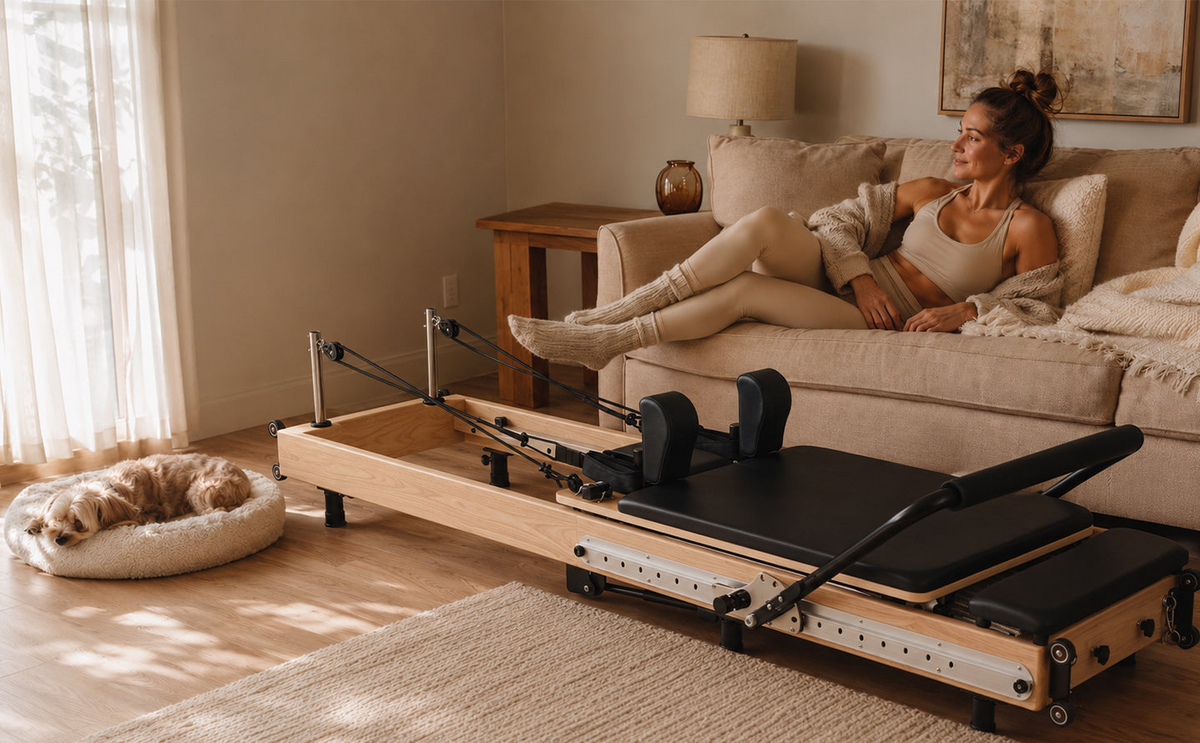
The first concern many shoppers have is reasonable: where will it go? Traditional commercial reformers can dominate a room. A home-friendly foldable reformer is designed for a different reality—apartments, shared rooms, bedrooms, and wellness corners that still need to function as living spaces.
Measure before you buy, including the space needed to use the carriage comfortably, not only the folded storage footprint. Think about ceiling height if you plan to include standing movements or position a screen nearby for guided workouts. Also consider the path from your entryway to the room where the reformer will live, including doors, hallways, corners, and stairs.
For many households, the best setup is not a dedicated home gym. It is a calm, usable corner with enough open floor space, a mat, and a reformer that folds away after class. That flexibility can make it easier to keep your home feeling like home rather than turning it into a permanent workout zone.
Noise matters, too. Smooth carriage movement and stable construction are meaningful details in an apartment, during early-morning sessions, or when someone else is working nearby. A quieter workout is more likely to become a regular one.
Questions to Ask Before Bringing a Reformer Home
Ask yourself whether you can leave the reformer accessible enough to use. Equipment hidden behind boxes or requiring a major room reset is less likely to become part of your week. Also ask whether folding and storing it fits your routine. A simple setup supports consistency; an elaborate one can create another excuse to postpone.
If space is extremely limited, a gym may be the better fit. If you have room for a compact folding model and want your workout to stay close at hand, a home reformer can make better use of the space you already have.
Within the BeReform range, the CORE Steel Foldable Reformer is the more compact, beginner-friendly option. The FLOW Wooden Foldable Reformer provides a full-size wooden setup for regular home use, while the PRIME Adjustable Reformer adds greater adjustability and hydraulic-assisted folding. The right model depends on both your available space and how you expect to train.
The Workout Experience Is Different
Gym workouts can be wonderfully energizing. There is music, movement, and the feeling that everyone around you showed up for the same reason. Group classes also remove decision fatigue. You arrive, follow the instructor, and leave feeling accomplished.
At home, the experience can be calmer and more adaptable. You can choose a challenging 45-minute class, repeat a favorite lower-body sequence, or spend 15 minutes moving gently when a demanding workout is not what your body needs. There is no pressure to keep pace with the room, and no need to feel self-conscious while learning something new.
For beginners, that privacy can be a relief. Still, form matters in Pilates. If you are new to reformer work, start with beginner-focused instruction that explains setup, spring changes, and body positioning clearly. A few guided sessions can build confidence quickly and help you get more from the machine.
Experienced Pilates attendees may want details that feel closer to the studio experience: a smooth glide, adjustable settings, dependable resistance, and a sturdy frame that feels secure through regular use. The right reformer should support progression, not become limiting after a few months.
When a Gym Membership Still Wins
A gym membership is often the smarter choice when you want several types of equipment but do not have room to own them. It can also be best if you rely on in-person coaching, enjoy a community setting, or prefer heavier strength training with barbells, cable machines, and a full range of cardio options.
It may also be the lower-risk choice if you are still figuring out what kind of movement you enjoy. Try classes, learn your preferences, and notice what you return to voluntarily. Buying a reformer because it looks beautiful in a spare room is not the same as buying one because Pilates has already become part of your life.
On the other hand, a gym membership is not always the flexible option it appears to be. Limited childcare hours, crowded evenings, long drives, and packed class schedules can slowly reduce how often you go. The best membership in the world has limited value if it does not fit the rhythm of your actual week.
When a Home Reformer Makes More Sense
A home reformer tends to be a strong fit for people who value predictable access. Busy professionals can move between calls. Parents can fit in a session while children nap or play nearby. Former studio regulars can continue a practice without planning their day around a class schedule.
It also works well for people building a more consistent, less all-or-nothing approach to fitness. You do not need an hour to make use of it. Twenty focused minutes can support your routine, and a gentle session can still count on days when energy is low.
Look for equipment that fits your home and your confidence level. Practical features such as stable construction, comfortable padding, smooth movement, adjustable resistance, and a foldable design make daily use easier. Purchase reassurance matters too. Clear setup guidance, safety information, warranty coverage, and reliable delivery help turn a major purchase into a more comfortable decision.
BeReform designs its home reformers around those everyday considerations, offering different combinations of frame material, adjustability, folding style, and price point. That makes it possible to choose based on how you will actually use the equipment rather than simply buying the most advanced model.
There is no prize for choosing the option that sounds most committed. Choose the one that removes the most barriers between you and the kind of movement you want to repeat next week. A workout routine becomes valuable when it has a real place in your life-and, ideally, a place you are happy to return to.
Frequently Asked Questions
Is a home Pilates reformer cheaper than a gym membership?
It can be over time, but the answer depends on the reformer price, your current membership or class costs, and how often you use the equipment. A home reformer requires a larger upfront investment, while a gym spreads the expense across recurring payments. The reformer becomes more economical per session when it is used consistently for several years.
How do I calculate the break-even point for a home reformer?
Add the reformer price, delivery fees, financing costs, and any essential accessories. Then divide that total by the amount you would otherwise spend each month on gym fees or Pilates classes. The result gives you an approximate number of months needed to reach the break-even point. Remember to include transportation, parking, childcare, annual fees, and cancellation charges when calculating your current costs.
Can home Pilates completely replace a gym membership?
It can for someone whose main goals are Pilates-based strength, mobility, balance, core control, and low-impact conditioning. It may not fully replace a gym for people who want heavy barbell training, multiple cardio machines, swimming facilities, group energy, or regular in-person coaching. Some people find that a home reformer and occasional studio or gym visits provide the best balance.
How much space do I need for a home reformer?
You need enough space for the reformer at its full working length, plus clearance around the sides and ends for safe movement. You should also measure the folded dimensions, storage area, folding path, and delivery route. A foldable model can work well in a shared room, but it still needs a level and clear surface while in use.
Which BeReform model is best for replacing a gym or studio routine?
The CORE Reformer is suited to beginners, smaller spaces, and buyers seeking a more accessible first reformer. The FLOW Reformer is designed for most regular home users who want a full-size wooden model. The PRIME Reformer is better suited to experienced users who want more adjustability and hydraulic-assisted folding.