
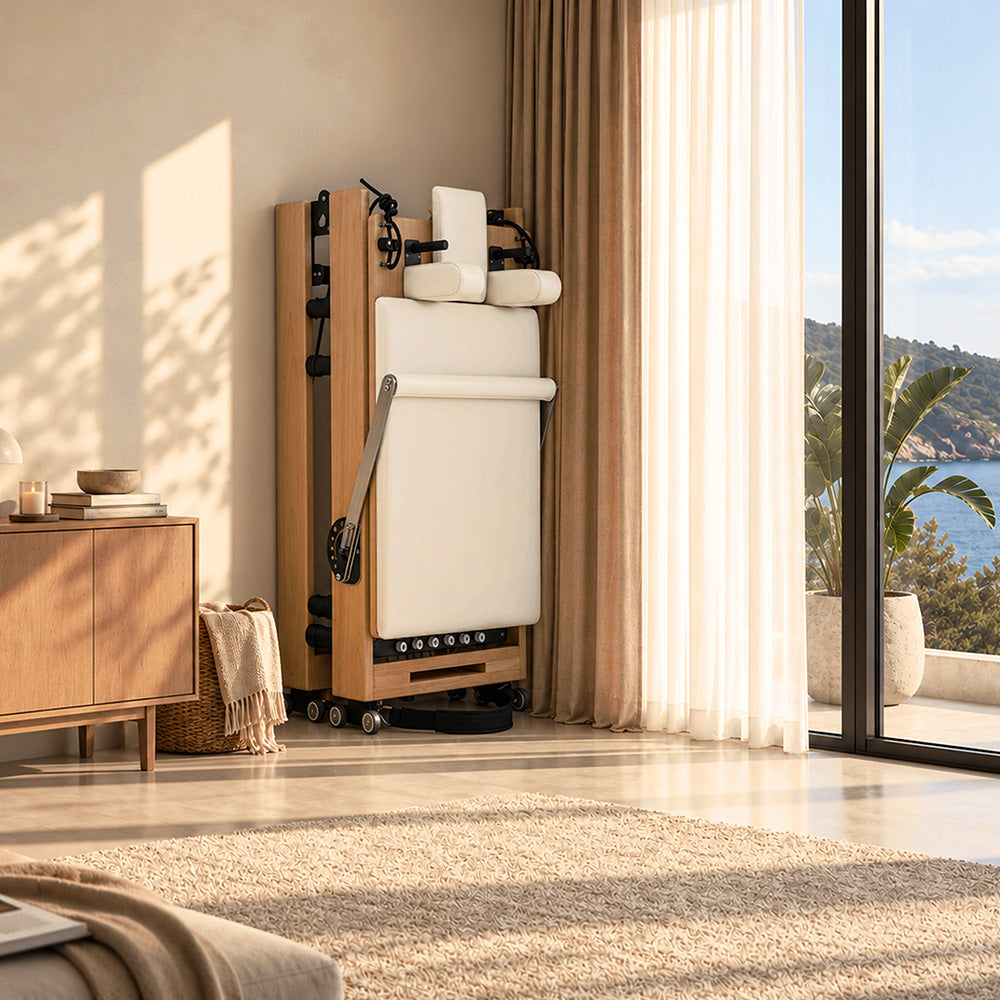
A reformer can change the way you use your home. It can turn a spare bedroom into a movement space, make a quiet morning workout possible before the house wakes up, or replace the drive and scheduling around studio classes. But when comparing folding versus fixed reformers, the best choice is rarely about which one is objectively better. It is about which one will still fit your room, routine, and expectations six months from now.
A fixed reformer offers a dedicated, always-ready setup. A folding reformer gives you a more flexible way to bring studio-inspired Pilates home without giving up a full room. Both can support consistent, satisfying workouts. The difference lies in how they ask you to live with the equipment.
Folding Versus Fixed Reformers at a Glance
The clearest distinction is storage. A fixed reformer stays assembled in its workout position. A folding reformer is designed to reduce its footprint after use, often standing upright or folding into a more compact shape for storage against a wall, in a bedroom, or in a multipurpose living area.
That difference affects more than square footage. A fixed model removes one step between you and your workout. If you have a dedicated exercise room, this can be a meaningful advantage. You can walk in, adjust your springs, and start moving without setting anything up.
A folding model adds a brief open-and-secure step before class, but it can make reformer Pilates possible in homes where a permanently assembled machine would feel overwhelming. For many apartment dwellers, parents, and anyone sharing a home office or guest room, that flexibility is what makes a regular practice realistic.
Neither option has to feel like a compromise. The right decision comes down to available space, how often you train, and the level of adjustment you want from your equipment.
Start With the Room, Not the Workout
Before comparing rails, springs, or carriage details, take an honest look at where the reformer will live. Measure the open floor area you can use during a workout, then measure the storage area available when the session is over. Remember to leave comfortable clearance around the machine for getting on and off, extending your legs, and moving safely.
A fixed reformer works best when it has a permanent home. A dedicated fitness room, a finished basement, or a generously sized bedroom can make it feel like a natural part of your routine. Its presence can also be motivating. When the machine is visible and ready, a 20-minute mobility session is easier to choose than scrolling past another reminder on your phone.
A folding reformer makes more sense when the same room has several jobs. Maybe your living room is also where your children play. Maybe your guest room doubles as an office, or your bedroom needs to stay calm and uncluttered. Being able to fold the machine away can protect both your floor space and the feeling of your home.
Remember to measure the folding path as well as the open and stored dimensions. The reformer needs enough room to transition safely between positions without hitting a wall, ceiling, door, or nearby furniture. If you plan to move it between rooms, also check doorway widths, hallway corners, stairs, and the weight you will need to manage.
The key question is simple: Will leaving the reformer out make you more likely to use it, or make you feel like it is always in the way? Your answer points you in the right direction.
How the Workout Experience Differs
A well-made folding reformer should still provide a stable, smooth workout experience. When fully opened and locked into position, it is designed to support controlled carriage work, spring resistance, footwork, core training, mobility sessions, and full-body Pilates flows. Modern home reformers can offer adjustable features that let beginners build confidence while giving experienced users room to progress.
Fixed reformers often appeal to people seeking the most permanent studio-like setup. Because the frame is never folded, they may offer a wider range of configurations or accessories depending on the model. They are a strong fit for dedicated practitioners who want their reformer set up precisely and ready for frequent, longer sessions.
Still, a fixed frame alone does not guarantee a better workout. Carriage glide, spring resistance, rail adjustment, padding, frame construction, locking points, and overall stability matter far more than whether a reformer folds. A thoughtfully designed foldable model can feel secure and capable for everyday home use, while an oversized fixed machine may be unnecessary for someone who mainly wants consistent Pilates three or four times a week.
If you are newer to reformer Pilates, focus less on recreating every possible studio setup and more on finding a machine you will enjoy using often. Consistency is where strength, mobility, and confidence build.
Setup Time Is Part of the Real Comparison
A fixed reformer has almost no daily setup time. That convenience matters for people who fit movement into small windows between meetings, school drop-off, dinner, or bedtime. When ten minutes is all you have, a machine that is ready to go can be the difference between moving and skipping it.
Folding reformers do require you to unfold, position, and secure the unit before use. Yet the process should be straightforward, not a project. If folding and unfolding takes only a few minutes and fits naturally into your routine, the storage benefit may outweigh the extra step.
The type of folding system also affects the experience. A manual folding design can be practical for users who do not mind handling more of the movement themselves. A hydraulic-assisted system can reduce the effort required to raise and lower the reformer, which may be valuable if you expect to open and store it after nearly every workout.
Think about your habits rather than your ideal schedule. Someone who loves an early, uninterrupted workout may prefer a fixed machine. Someone who exercises in the evening after converting the living room into a clear space may find a folding model far more practical.
Who Should Choose a Folding Reformer?
A folding reformer is often the smarter investment when space is valuable and flexibility matters. It is especially useful for people who want studio-inspired Pilates at home without dedicating an entire room to equipment.
Choose a foldable option if you live in an apartment or condo, need to share your workout area with everyday life, or simply prefer a tidier visual environment. It also suits renters who expect to move, homeowners who want equipment that can be stored for guests, and couples or families who need the floor back when a session ends.
Do not assume a folding design is only for beginners. An experienced Pilates enthusiast may choose one because it solves a lifestyle problem, not because they need less from their workout. Look for a sturdy frame, dependable locking mechanism, smooth carriage movement, appropriate resistance options, and adjustments that suit your height and preferred exercises.
BeReform offers several folding options for different home routines. The CORE Steel Foldable Reformer is a lighter option designed for beginners and compact spaces. The FLOW Wooden Foldable Reformer uses a manual folding system and offers a more substantial wooden setup for regular home workouts. The PRIME Adjustable Wooden Reformer adds hydraulic-assisted folding and greater adjustability for experienced users or households that expect to fold the reformer frequently.
A folding reformer can make it easier to keep your home wellness routine approachable. When equipment feels designed for residential spaces rather than a commercial gym floor, it is easier to see it as part of daily life instead of a large, intimidating purchase.
Who Should Choose a Fixed Reformer?
A fixed reformer is a natural fit for a dedicated home gym or a room where the machine can remain open without disrupting daily life. It is ideal for people who practice frequently, want immediate access, and value a permanent workout environment.
You may also prefer a fixed model if multiple people in your household will use it throughout the week. Keeping it assembled means each person can make their adjustments and begin without moving or storing the machine in between. For a serious at-home Pilates practice, that always-ready convenience can feel worthwhile.
Fixed reformers can be the better choice when you know your needs are advanced and a specific model offers the larger dimensions, elevated frame, accessories, or expanded adjustability you want. Just be sure the equipment earns its footprint. A reformer should support your life, not force you to reorganize your entire home around it.
Look Beyond the Frame Style
Once you know whether folding or fixed fits your space, compare the details that shape daily use. A quiet, smooth carriage helps make early or late workouts more comfortable for everyone at home. Quality upholstery and supportive padding improve comfort during longer sessions. Adjustable footbars, headrests, ropes, rails, and resistance settings make the reformer more adaptable as your strength and skill develop.
Weight capacity and frame stability deserve attention, particularly in a multi-user household. So does the folding mechanism itself. It should feel secure, intuitive, and manageable for the person who will use it most often. If you plan to store the reformer upright, confirm that its folded dimensions work with your ceiling height and storage location.
Check how the reformer is secured in both its open and stored positions. Before every workout, confirm that the frame is fully opened and all required locks are engaged. Do not exercise while the folding mechanism is partially open or unsecured.
It is also wise to consider delivery, return and warranty terms, and customer support before buying. A home reformer is an investment in your routine, so clear setup guidance and dependable protection can add real peace of mind. BeReform focuses on folding designs that bring these practical home considerations to the forefront.
Choose the Reformer That Removes Friction
The best reformer is not necessarily the largest, most elaborate, or most permanent one. It is the one that makes you think, “I can use this today.” For some homes, that means a fixed reformer waiting in a dedicated workout room. For others, it means a foldable machine that gives you a full session now and your floor space back afterward.
Choose the setup that feels easy to return to on ordinary Tuesdays, not just the one that looks impressive on day one. A calm, repeatable movement practice has a way of making a home feel better lived in.
Frequently Asked Questions
Are folding reformers as stable as fixed reformers?
A well-constructed folding reformer can provide a stable experience for regular home Pilates when it is fully opened, correctly assembled, and securely locked. Stability depends on the frame, base footprint, locking mechanism, carriage system, and weight capacity—not only on whether the machine folds. Fixed reformers may feel more permanent, but a fixed frame does not automatically guarantee better construction.
Is it safe to fold and unfold a reformer every day?
Yes, if the reformer is designed for frequent folding and you follow the manufacturer’s instructions. Secure the carriage and remove or position accessories as directed before folding. Keep fingers, children, and pets away from the hinges and moving parts. Regularly inspect the locks, wheels, frame, and folding mechanism, and stop using the machine if anything feels loose or damaged.
How much space does a folding reformer need?
Measure the reformer in three stages: fully open, moving through its folding path, and completely stored. You also need clearance around the open machine for mounting, carriage travel, straps, and arm and leg movement. If it will be stored upright, check the ceiling height and make sure the stored reformer cannot roll, tip, or open unexpectedly.
Is manual or hydraulic-assisted folding better?
Manual folding is a straightforward option for users who are comfortable handling more of the reformer’s movement themselves. Hydraulic assistance reduces the effort required to raise and lower the frame, making it useful for people who store the reformer after most sessions. Neither is automatically better; the right choice depends on the machine’s weight, your strength and mobility, and how often you expect to fold it.
Which BeReform folding reformer should I choose?
Choose the CORE if you are a beginner, have a compact workout area, or prefer a lighter steel-frame model. Choose the FLOW if you want a wooden reformer for regular home workouts and are comfortable with manual folding. Choose the PRIME if you want greater adjustability and hydraulic-assisted folding for frequent storage.