
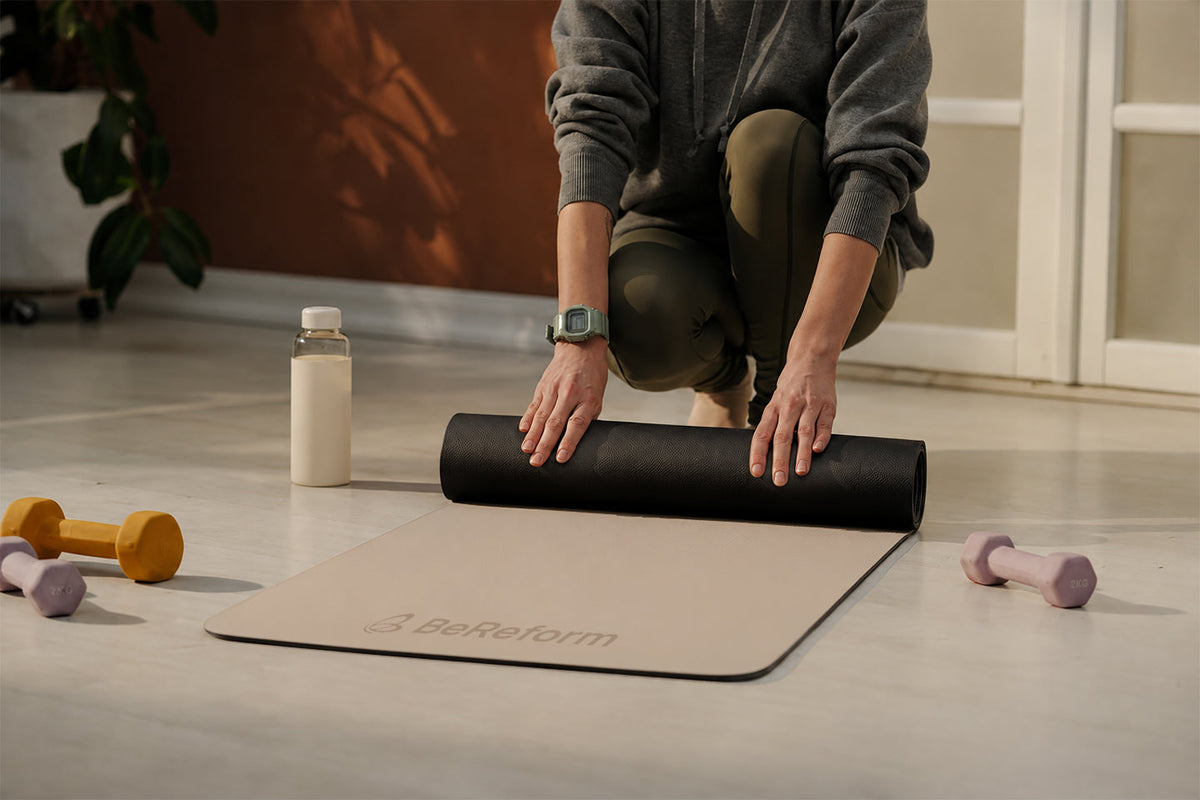
When your joints ache after yoga, it's clear your mat isn't doing its job. For superior shock absorption and joint protection, choose a high-density mat made from recycled PU and natural rubber, like the Bereform Recycled PU Yoga/Pilates Mat - Pink. This specific pink pu yoga mat is engineered to cushion impact and provide stability, offering the comfort your body needs.
Why Your Mat Needs Superior Shock Absorption
A yoga mat's shock absorption directly protects sensitive joints like knees, wrists, and hips from impact during practice. When performing poses that put pressure on these areas, such as tabletop, lunges, or inversions, inadequate cushioning can lead to discomfort, strain, or even injury over time. Your body needs a mat that can absorb the force of movement, distributing pressure evenly rather than allowing it to concentrate on delicate joint capsules.
The type of yoga mat that offers the best joint protection typically combines a generous thickness with a high-density material. Density is often more crucial than thickness alone. A thick but soft, low-density mat might compress too easily, offering little actual protection. Conversely, a thinner, high-density mat provides firm, responsive cushioning.
The Role of Recycled PU and Natural Rubber in Joint Support
Recycled PU (polyurethane) combined with natural rubber offers an optimal blend of cushioning, stability, and grip for excellent joint support. Natural rubber provides a firm, grounded base with inherent shock-absorbing qualities. The recycled PU layer enhances this, offering a smooth, grippy surface that prevents slipping while adding a responsive bounce-back effect that further cushions impacts.
This material composition results in a mat that feels both supportive and comfortable. Are recycled PU mats good for sensitive joints? Absolutely. Their high-density structure means they don't compress completely under pressure, providing consistent support for your wrists, knees, and hips throughout your practice. This makes them ideal for anyone seeking to prevent discomfort or manage existing joint sensitivity.
Choosing the Best Shock Absorbing Yoga Mat for Bad Knees
When selecting a mat for joint sensitivity, prioritize density over mere thickness, alongside a reliable non-slip surface. The ideal mat will absorb impact effectively without feeling squishy or unstable. Look for materials like recycled PU and natural rubber, which provide a firm yet cushioned foundation. This combination ensures your weight is supported without bottoming out the mat.
Does a high-density mat prevent wrist and knee pain during yoga? Yes, it significantly reduces it. A high-density mat distributes your body weight more effectively, lessening the direct pressure on sensitive points. Crucial features also include a non-slip texture for enhanced stability and safety during various poses. This prevents micro-adjustments or slips that can aggravate joints. While mat thickness matters, ensure it’s backed by density for true shock absorption. Consider an optimal thickness of around 4-5mm for a good balance of cushioning and stability. For those with particularly bad knees, exploring how to properly maintain your entire fitness setup, including your mat, can also prolong its protective qualities.
Bottom Line
For the best shock absorbing yoga mat for bad knees, prioritize mats combining high-density recycled PU and natural rubber with a non-slip surface. This setup provides the firm, supportive cushioning needed to prevent wrist and knee pain.
Bereform Recycled PU Yoga Mat vs. Common Alternatives
The Bereform Recycled PU Yoga/Pilates Mat - Pink stands out by combining eco-friendly materials with superior joint cushioning compared to standard mat types. Here’s a quick comparison:
| Feature | Bereform Recycled PU & Natural Rubber Mat | PVC Mats (e.g., standard gym mats) | TPE Mats (Thermal Plastic Elastomer) | Foam Mats (e.g., NBR) |
|---|---|---|---|---|
| Joint Support & Shock Absorption | Excellent: High-density, firm yet cushioned, responsive. Prevents bottoming out. | Fair: Can be too soft or too thin. Compresses easily. | Good: Lighter than rubber, decent cushioning, but less dense. | Variable: Often very thick but low density, can feel unstable and squishy. |
| Grip & Stability | Superior: Non-slip PU surface, natural rubber base for firm grip on floor. | Average: Can become slippery with sweat. | Good: Textured surface offers decent grip, but less durable than PU. | Poor: Often very smooth, less stable for active practice. |
| Eco-Friendliness | High: Made from recycled PU and natural, renewable rubber. Biodegradable. | Low: Not biodegradable, can contain harmful phthalates. | Moderate: Recyclable, but still a synthetic material. | Low: Synthetic, not easily recyclable. |
| Durability | High: Designed for long-term, regular use. Resistant to wear. | Moderate: Can crack or stretch over time. | Moderate: Less durable, can show wear faster than rubber/PU. | Low: Prone to dents and tearing. |
Practical Tips for a Joint-Friendly Practice
Beyond your mat, maintaining proper alignment, listening to your body, and warming up adequately are crucial for protecting your joints during yoga. Don't push into pain; instead, modify poses to suit your body's current capabilities. Using props like blocks or blankets can also alleviate pressure on joints, providing extra support where needed. When choosing your mat, consider your personal practice style, body weight, and any specific joint concerns. A mat that feels right for a gentle restorative practice might not offer enough support for a dynamic Vinyasa flow.
For those looking to integrate various fitness routines at home, selecting the right equipment is key to preventing discomfort. Just as you'd consider the impact of a mat on your joints, think about how other tools, like soft leather kettlebells, can minimize noise and protect your floors.
Shop Recycled PU Yoga/Pilates Mat - Pink Now
Frequently Asked Questions
What type of yoga mat offers the best joint protection?
High-density yoga mats made from materials like recycled PU and natural rubber offer the best joint protection. They provide firm, responsive cushioning that supports joints without compressing too much.
Are recycled PU mats good for sensitive joints?
Yes, recycled PU mats are excellent for sensitive joints. Their high-density composition and non-slip surface provide superior cushioning and stability, reducing pressure on wrists, knees, and hips during practice.
How does mat thickness and density affect shock absorption?
Mat density is more critical than thickness for shock absorption. A high-density mat, regardless of being slightly thinner, offers more effective support than a thick, low-density mat that compresses easily. The ideal mat balances thickness with sufficient density.
What features should I look for in a joint-friendly yoga mat?
Look for high density, a non-slip surface, and durable materials like recycled PU and natural rubber. A thickness of 4-5mm is often optimal, but prioritize a mat that feels firm and stable under pressure.
Does a high-density mat prevent wrist and knee pain during yoga?
Yes, a high-density mat significantly helps prevent wrist and knee pain. It provides a stable, cushioned surface that distributes pressure more evenly, reducing the direct impact on these sensitive joints during various poses.
How often should I replace my joint-friendly yoga mat?
You should replace your joint-friendly yoga mat every 1-3 years, or sooner if you notice visible wear, reduced grip, or decreased cushioning. Regular use, especially for intensive practices, will accelerate wear.