
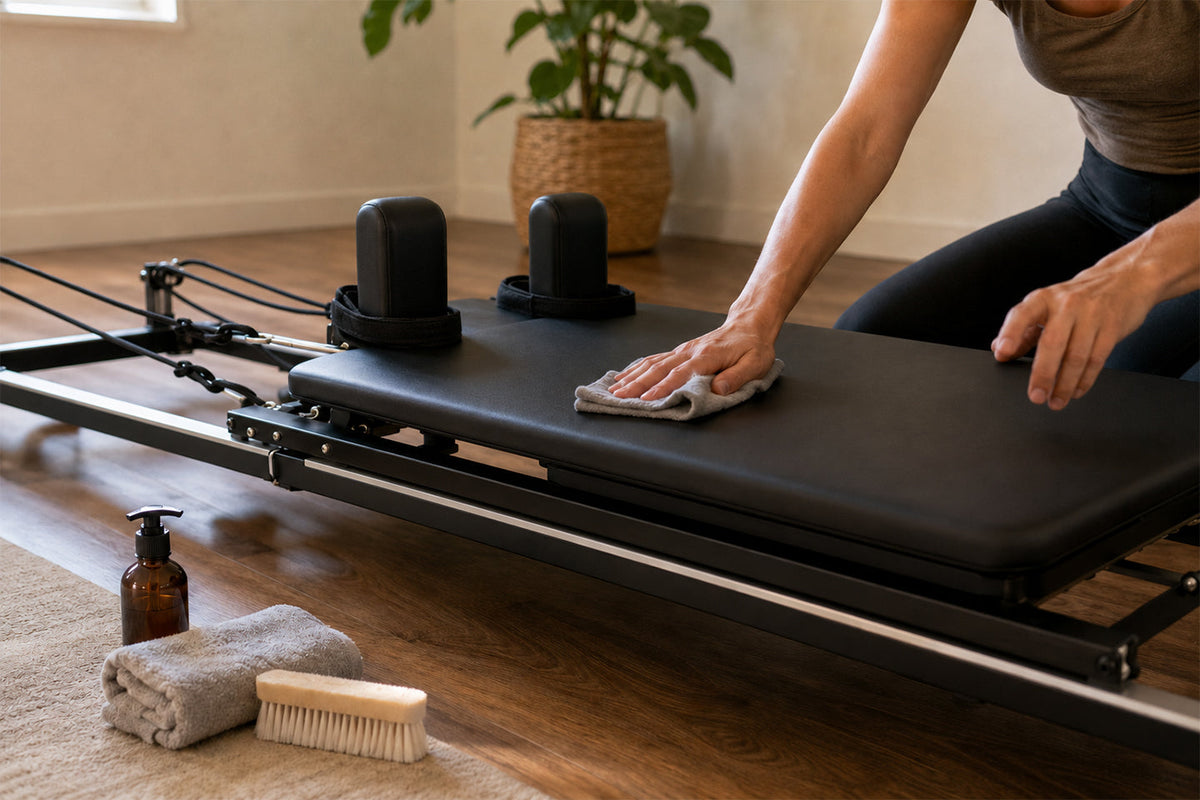
Maintaining your home Pilates reformer ensures smooth operation and extends its lifespan. Regular cleaning, focused lubrication of moving parts, and diligent inspection prevent common issues like squeaks and wear, keeping your investment in top condition for consistent, effective workouts.
How Often Should I Clean and Inspect My Home Pilates Reformer?
You should clean your home Pilates reformer after every few sessions and conduct a thorough inspection monthly to maintain peak performance. Consistent care prevents dirt buildup and catches minor issues before they become major repairs, ensuring a safe and effective workout environment.
After each use, a quick wipe-down of the carriage and foot bar removes sweat and dust. This simple step helps maintain hygiene and prevents materials from degrading prematurely. Many home users on Reddit search for 'Pilates reformer maintenance tips' because they want to preserve their equipment, and consistent care is the number one tip. For a more comprehensive clean, set aside time monthly to examine all components. A monthly inspection means checking the springs for rust or deformation, feeling the ropes and straps for fraying, and ensuring the wheels glide smoothly. This proactive approach not only extends your machine's life but also preserves the precision movement crucial for effective Pilates practice.
For those dedicating significant time to their practice, or sharing their machine, more frequent cleaning of contact surfaces might be necessary. This prevents grime accumulation, which can hinder the smooth operation of parts like the carriage wheels and tracks. Early detection of wear can save you from costly replacements down the line, ensuring your Core Steel Foldable Pilates Reformer remains a reliable partner in your fitness journey.
Bottom Line: Regular, scheduled cleaning and inspections are crucial for extending your reformer's life and ensuring a consistently smooth, safe workout experience.
What Are the Best Products for Cleaning a Steel Reformer Without Damage?
The best products for cleaning a steel reformer without damage are mild, non-abrasive cleaners and a soft cloth, avoiding harsh chemicals that can strip finishes or degrade upholstery. For the steel frame of your Core Steel Foldable Pilates Reformer, a damp cloth with a small amount of mild dish soap is usually sufficient.
To clean steel pilates reformer at home effectively, start with the frame. Wipe down the steel with a lightly damp, lint-free cloth, then dry it thoroughly immediately to prevent water spots or potential rust. For the carriage and upholstered shoulder rests, use a cleaner specifically designed for Pilates equipment or a diluted solution of water and a gentle, pH-neutral soap. Apply the solution to a cloth, not directly to the surface, and wipe down, then dry completely.
Ropes and straps can be spot cleaned with a damp cloth if needed, but avoid submerging them or using strong detergents, which can weaken the fibers. For rubber components, like the foot bar cover, a simple wipe with a damp cloth is usually enough. Avoiding abrasive sponges or cleaners containing ammonia, bleach, or solvents protects your machine's finish and material integrity.
| Component | Cleaning Frequency | Recommended Product/Method |
|---|---|---|
| Steel Frame (Core Steel Foldable Pilates Reformer) | Weekly/Bi-weekly | Damp cloth with mild soap solution, dry immediately. |
| Carriage & Upholstery | After each use | Mild, non-abrasive cleaner (e.g., diluted Pilates equipment cleaner), wipe dry. |
| Ropes & Straps | Monthly inspection, spot clean as needed | Damp cloth, mild soap if necessary; air dry completely. Avoid harsh chemicals. |
| Wheels & Tracks | Monthly lubrication/cleaning | Clean with lint-free cloth, lubricate with silicone-based spray (NOT oil). |
| Springs | Monthly inspection | Wipe with dry cloth to remove dust. Do not lubricate springs. |
Bottom Line: Use mild, pH-neutral cleaners and soft cloths for all components, focusing on immediate drying, especially for the steel frame, to preserve your reformer's condition.
How Can I Prevent Common Issues Like Squeaks or Stiff Movement on My Machine?
You can prevent common issues like squeaks or stiff movement on your Pilates reformer by regularly lubricating moving parts and keeping tracks clean. Many home users ask for tips on how to grease or lube reformer tracks and springs because irritating noises can disrupt your focus and workout flow.
For the smooth-glide carriage wheels and tracks, the primary cause of stiffness or squeaks, clean the tracks with a lint-free cloth to remove any dust or debris. Then, apply a silicone-based lubricant spray. Crucially, use silicone, not oil, as oil can attract more dirt and degrade plastic components over time. Spray a small amount onto a cloth and wipe the tracks, then roll the carriage back and forth several times to distribute it evenly. You'll notice the precision movement of the Core Steel Foldable Pilates Reformer returns to its silent best. Pulleys also benefit from a small amount of silicone lubricant applied to their axles if they begin to squeak. However, springs should never be lubricated; simply wipe them down with a dry cloth to remove dust.
Ensuring your springs are properly attached and not rubbing against each other can also prevent noise. If a spring seems to be vibrating excessively, re-seat it or inspect for any deformities. This attention to detail helps maintain foldable Pilates machine performance and a quiet, efficient home workout environment, similar to how proper care for your soft leather kettlebells prevents apartment workout noise.
Bottom Line: Regular cleaning of tracks and strategic application of silicone lubricant to wheels and pulleys are key to eliminating squeaks and maintaining fluid motion, but never lubricate springs.
Are There Specific Maintenance Steps for a Foldable Pilates Reformer?
Yes, foldable Pilates reformers require specific maintenance steps focused on their unique folding mechanism and storage. The primary difference lies in the care taken during folding, unfolding, and storage to protect the frame's integrity and moving parts.
When folding your Core Steel Foldable Pilates Reformer, always follow the manufacturer's instructions precisely. Ensure all pins or locks engage correctly and avoid forcing the mechanism. Incorrect folding can strain the frame, hinges, or cables, leading to misalignment or damage over time. Before folding, check that all accessories like the foot bar or shoulder rests are properly secured or removed, preventing them from catching or bending. When unfolded, confirm all locking mechanisms are fully engaged for stability and safety during use.
For storage, the Core Steel Reformer's compact fold design allows it to store upright against a wall. This is excellent for space-saving, but ensure it's placed on a level surface, ideally against a sturdy wall, to prevent accidental tipping. Keep it away from high-traffic areas or places where it might be bumped. Preventing rust on home Pilates reformer frame hinges is crucial for foldable models; ensure it's stored in a dry environment. Wipe down any moisture after use, especially before folding, to avoid trapping dampness.
Bottom Line: Adhere strictly to folding instructions and ensure secure, dry storage to protect the folding mechanism and frame of your foldable reformer.
When Should I Consider Replacing Parts on My Home Reformer?
You should consider replacing parts on your home Pilates reformer when you observe visible wear, damage, or a noticeable decline in performance that maintenance can't fix. This proactive approach ensures safety and preserves the machine's effectiveness.
Key inspection points for wear and tear include springs, ropes, and straps. Springs, which provide adjustable resistance, should be checked monthly for signs of stretching, rust, kinks, or deformation. If a spring appears longer than others, is corroded, or doesn't offer consistent resistance, it's time to replace it. Always replace springs in sets if possible, or at least replace both springs of the same color/tension to maintain balance. Ropes and straps should be inspected for fraying, tears, or excessive thinning. Any damage here compromises safety and functionality; these should be replaced immediately.
Other components like wheels, pulleys, and carriage stoppers also wear over time. If wheels develop flat spots, crack, or if pulleys become stiff even after lubrication, they might need replacement. The non-slip foot bar and shoulder rests should also be checked for degradation of their gripping surface. Ignoring these signs can lead to inconsistent workouts, potential injury, or further damage to your machine. For optimal performance and longevity, use genuine replacement parts from your reformer's manufacturer.
Bottom Line: Replace springs, ropes, and straps at the first sign of wear or damage to ensure continued safety, consistent resistance, and smooth operation of your reformer.
Shop Core Steel Foladble Pilates Reformer NowFrequently Asked Questions
How do I stop my Pilates reformer from squeaking?
To stop squeaks, clean the carriage tracks and wheels thoroughly to remove dust and debris, then apply a silicone-based lubricant to the tracks. Avoid oil-based lubricants, which can attract more dirt. Ensure springs are dry and properly seated.
What lubricant is safe for reformer wheels and tracks?
A silicone-based lubricant spray is safest and most effective for reformer wheels and tracks. It won't degrade plastic components or attract excessive dirt like petroleum-based oils can, preserving the smooth-glide carriage movement.
How often should I replace reformer springs?
The lifespan of reformer springs varies with use, but generally, inspect them monthly. Replace springs if you notice visible stretching, kinks, rust, or inconsistent resistance. Many manufacturers recommend replacing springs every 2-5 years as a general guideline, regardless of visible wear, especially for heavy use.
Can I use household cleaners on my reformer's upholstery?
It's best to avoid harsh household cleaners like bleach or ammonia-based products on reformer upholstery, as they can cause damage or discoloration. Instead, use a mild, pH-neutral cleaner specifically designed for Pilates equipment or a diluted solution of gentle soap and water, applied with a soft cloth.
What's the best way to store a foldable reformer long-term?
For long-term storage, ensure your foldable reformer is clean and completely dry to prevent rust, especially on steel components. Fold it according to the manufacturer's instructions, then store it upright in a dry, stable environment, away from direct sunlight or extreme temperature changes. This protects the frame and mechanisms.
Is the Core Steel Foldable Pilates Reformer easy to maintain?
Yes, the Core Steel Foldable Pilates Reformer is designed for straightforward maintenance. Its durable steel frame is easy to wipe clean, and its smooth-glide carriage requires only simple lubrication to maintain performance. The folding mechanism is intuitive, making regular care manageable for home users.