
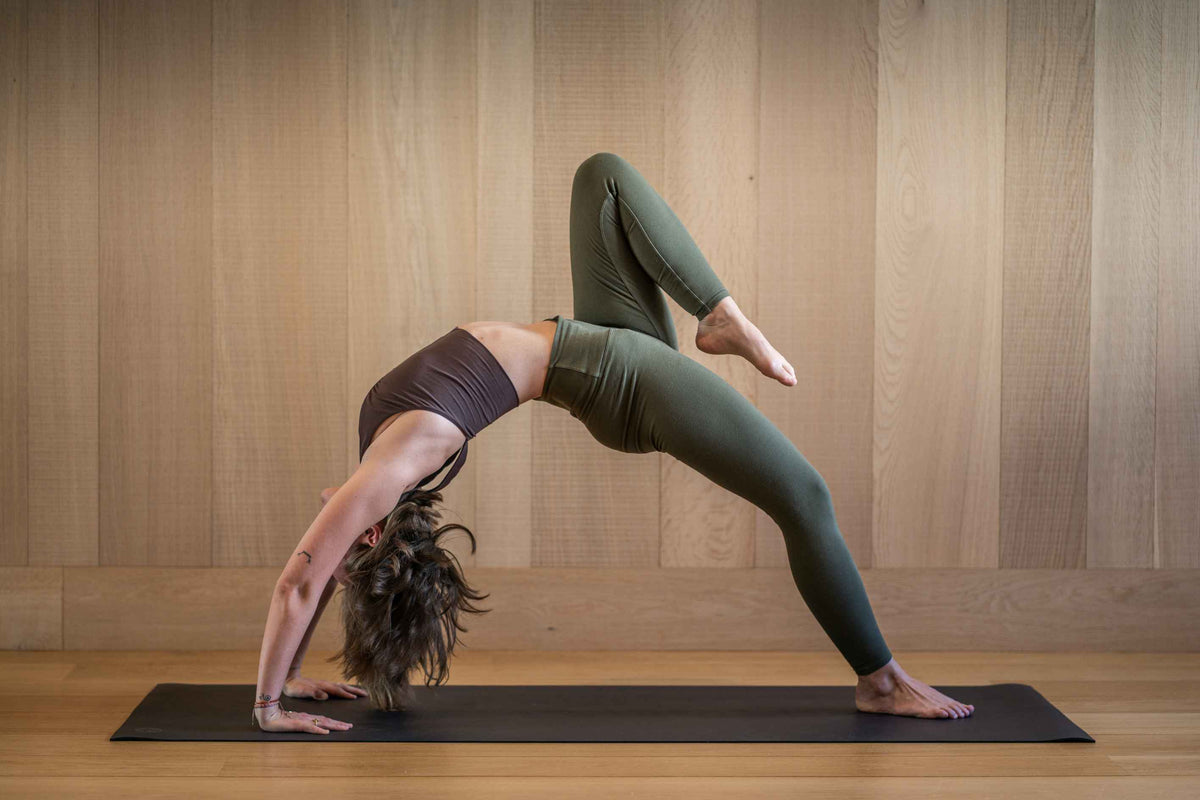
A quiet corner of the living room, a supportive mat, and 20 uninterrupted minutes can be enough to begin. So, can you do Pilates without a reformer? Absolutely. Mat Pilates can build meaningful core strength, mobility, balance, body awareness, and control without requiring a large piece of equipment or a studio schedule.
A reformer can add variety, adjustable resistance, and new movement possibilities, but it is not a requirement for practicing Pilates well. The best starting point is the one you can return to consistently, whether that means a simple mat routine before work or a longer session after the kids are asleep.
Can You Do Pilates Without a Reformer? Yes.
Pilates began as a method centered on controlled movement, breath, alignment, and concentration. The reformer is one well-known way to practice it, but the principles behind the method work just as well on the floor. On a mat, your body provides much of the resistance. Gravity, leverage, balance, and slow tempo make familiar movements surprisingly challenging.
A thoughtful mat practice can train your deep abdominal muscles, glutes, hips, shoulders, and back. It can also help you notice habits that often get lost in fast-paced workouts, such as gripping your neck during core work, arching your lower back, or rushing through a movement before you have found control.
For beginners, this can be a real advantage. You have less equipment to learn and more space to focus on the basics: breathing steadily, keeping your ribs from flaring, moving with intention, and choosing a range of motion that feels stable. For experienced studio clients, mat work can be an effective way to maintain a Pilates routine between reformer sessions.
That said, no-reformer Pilates is not automatically easier. A slow roll-up, single-leg stretch, side-lying leg series, or plank variation can demand a great deal of precision. The challenge simply comes from a different place.
What Mat Pilates Can Do for Your Body
The most immediate benefit of mat Pilates is accessibility. You can practice at home without making room for a carriage, spring system, or class schedule. A quality Pilates or yoga mat helps with comfort and grip, while small accessories such as a Pilates ball, resistance band, ring, or light weights can add variety when you are ready.
Mat work is especially useful for building a foundation. Exercises such as bridges, dead bugs, toe taps, bird dogs, modified side planks, and swimming variations teach you to stabilize before you move. That awareness can also support everyday tasks, from sitting more comfortably at a desk to lifting groceries with better control.
It is also a practical option if your goal is low-impact movement. Pilates can be adjusted for different energy levels, fitness backgrounds, and life seasons. Some days, a gentle mobility-focused sequence may feel right. Other days, you may want longer sets, fewer breaks, and more demanding core or glute work.
Results depend on consistency and progression. Repeating the same easy routine forever may feel good, but eventually your body needs a new challenge. You can progress mat Pilates by slowing down, increasing repetitions, improving form, adding unilateral work, reducing support, or incorporating small props. The goal is not to make every workout harder for the sake of it. It is to make your movement more controlled and capable over time.
How to Make Pilates at Home Feel Effective
A reformer-free routine works best when it has a clear purpose. Rather than trying to copy an hour-long studio class on the floor, choose a focus for the session. You might spend 20 minutes on core and posture, lower-body strength, mobility, or a full-body reset.
Start With Control, Not Intensity
Begin with a few minutes of breathing and gentle mobility. Pelvic tilts, cat-cow, shoulder circles, and hip rotations can help you settle into your body before more demanding work. Then move into exercises that ask for steady trunk control, such as bridges, tabletop toe taps, or quadruped reaches.
If an exercise causes sharp pain, numbness, or joint discomfort, stop and adjust. Pilates should feel challenging in the muscles, not punishing in your neck, lower back, hips, or knees. A smaller range of motion is often the stronger choice when it helps you stay aligned.
If you are new to Pilates or managing an injury, recent surgery, balance concern, or ongoing pain, qualified instruction can help you choose movements and modifications that suit your needs.
Use a Simple Full-Body Structure
For most home routines, it helps to include a little spinal mobility, core stability, lower-body work, upper-body support, and a calm finish. You do not need dozens of exercises. A well-paced sequence of six to eight movements, repeated with attention, can be more valuable than a complicated routine you avoid doing again.
Try pairing a glute bridge with a dead bug, then side-lying leg lifts with a modified side plank. Add a prone back-extension variation or swimming movement for the posterior body, and finish with a hip flexor stretch and easy spinal rotation. The exact exercises matter less than your ability to breathe, control the movement, and maintain good form.
Give Yourself Enough Support
Your setup does not need to look like a commercial studio. Still, a thin rug or towel can make floor work uncomfortable and distract you from the session. A supportive mat gives your spine, knees, and wrists a more comfortable surface, making it easier to practice regularly.
Props can be helpful, but they are optional. A small ball between the thighs may help you feel inner-thigh engagement. A resistance band can add pull-based upper-body work that is difficult to recreate with body weight alone. A Pilates ring and light ankle or wrist weights can introduce additional resistance without requiring a large workout area.
The BeReform 13-in-1 Pilates Accessories Kit brings these tools together in a portable set, including a Pilates ring, ball, resistance bands, ankle and wrist weights, and grip socks. It can provide a simple next step for someone who wants more variety without committing to a reformer.
Use props to clarify a movement or create thoughtful progression, not because more equipment automatically means a better workout.
What a Reformer Changes—and What It Does Not
The reformer brings springs, a moving carriage, straps, and adjustable positions into the practice. Those features can make Pilates feel more dynamic while offering resistance in multiple directions. You can push, pull, squat, row, lunge, and challenge balance with support that a mat alone cannot provide.
For some people, spring resistance makes exercises easier to understand. The carriage can offer feedback as you move, while straps can create assistance or resistance depending on the exercise. This makes a reformer useful for beginners learning movement patterns as well as experienced practitioners looking for greater variety.
It also changes the experience of training at home. A foldable reformer can turn a spare room, bedroom, or living area into a studio-inspired workout space, then store away when you need the room back. For people who miss the flow of a studio class but want more flexibility, that convenience can make regular movement far more realistic.
But a reformer does not replace the fundamentals. You still need breath, alignment, control, and thoughtful progression. Buying equipment will not create a routine on its own. The best results come from using the equipment consistently and choosing exercises that fit your current ability.
Mat Pilates Versus Reformer Pilates
Mat and reformer Pilates share the same underlying principles, but they create challenge differently.
On the mat, your body weight and gravity provide most of the resistance. This often requires you to stabilize without external support, which can make familiar core exercises surprisingly demanding.
On a reformer, springs can make a movement more challenging or more supportive depending on the exercise. The moving carriage also introduces feedback, instability, and a larger library of pulling and pressing patterns.
Neither method is universally better. Mat Pilates offers simplicity, portability, and almost no setup time. Reformer Pilates offers adjustable resistance, assistance, and greater exercise variety. Many people use both: mat sessions when time or space is limited and reformer workouts when they want more resistance or a studio-inspired experience.
When a Home Reformer Is Worth Considering
A reformer may be a smart next step if you already enjoy Pilates and want more variety than mat sessions offer. It can be especially appealing if you are replacing frequent studio visits, sharing the equipment with another household member, or looking for a low-impact strength option that feels engaging enough to use week after week.
Space matters, too. Traditional reformers can feel unrealistic in an apartment or multipurpose home. A foldable model changes that calculation by allowing you to prioritize your living space without giving up the option of a more complete Pilates setup.
BeReform offers several home-friendly options. The CORE Steel Foldable Reformer is designed as a more approachable first reformer for beginners and smaller spaces. The FLOW Wooden Foldable Reformer suits regular home users who want a more substantial wooden setup, while the PRIME Adjustable Reformer adds hydraulic-assisted folding and greater adjustability for experienced users.
Still, there is no need to rush. If you are new to Pilates, begin with mat work and learn what you enjoy. Notice whether you want more resistance, more exercise options, or the familiar feel of a carriage-based workout. Those are better reasons to invest than feeling like you need a reformer to count as a real Pilates person.
Your Pilates practice can start with the space you have and grow when it makes sense. A mat is enough to build the habit. A reformer is there when you want to make that habit feel even more like your own at-home studio.
Frequently Asked Questions
Do beginners need a reformer to start Pilates?
No. Beginners can learn the foundations of Pilates through mat exercises that focus on breathing, control, alignment, and core stability. A mat also removes the need to learn spring settings and carriage transitions at the beginning. Guided instruction is still helpful for developing good movement habits.
Is mat Pilates as effective as reformer Pilates?
Mat Pilates can be highly effective for improving core strength, muscular endurance, balance, mobility, and body awareness. Reformer Pilates offers adjustable spring resistance, assistance, and a wider variety of exercises. The more effective option is usually the one that matches your goals and that you can practice consistently.
What equipment do I need for Pilates without a reformer?
A supportive, non-slip mat is enough to begin. Optional accessories include a small Pilates ball, resistance bands, a Pilates ring, sliders, grip socks, and light ankle or wrist weights. Start simply and add equipment only when it provides a clear form of support or progression.
Can mat Pilates build strength without weights?
Yes. Body weight, gravity, leverage, unilateral exercises, slower tempo, longer holds, and increased range of motion can all make mat Pilates more challenging. Small weights and resistance bands can provide additional progression, although good form and consistent practice remain more important than using the heaviest resistance.
When should I consider buying a Pilates reformer?
Consider a reformer when you already enjoy Pilates, want adjustable resistance and more exercise variety, or find that studio schedules and costs make consistency difficult. Before buying, measure your workout and storage areas, decide how often you expect to use it, and choose a model that matches your experience level rather than simply selecting the most advanced option.