
A 6:15 p.m. Pilates class can feel restorative until traffic runs late, a meeting spills over, or a child needs dinner. That is where the decision around Pilates reformer versus studio classes becomes less about which option is “better” and more about which one fits the life you actually live.
Studio classes offer instruction, energy, and a ready-made appointment with your body. A home reformer offers something equally valuable for many people: the freedom to move when there is a spare 20 minutes, not only when a class spot is available. Both can build strength, mobility, control, and confidence. The right choice depends on your budget, space, experience, and the kind of consistency you can realistically maintain.
Home Pilates Versus Studio Classes: The Real Difference
The most noticeable difference is not the workout itself. Whether you are in a studio or at home, the reformer uses spring resistance, a moving carriage, straps, and a stable frame to support low-impact, full-body training. You can work your core, legs, arms, posture, balance, and mobility without the repetitive impact of many cardio-forward routines.
What changes is the experience around the equipment. A studio class gives you an instructor in the room, planned sequencing, and corrections in real time. That structure can be especially helpful when you are brand-new, returning after time away, or working around an injury with guidance from an appropriately qualified professional.
At home, you decide the pace, length, and timing. You can repeat foundational work until it feels familiar, take a live virtual class, follow a recorded session, or simply do the movements you know make your body feel better. For busy professionals, parents, and anyone tired of arranging their week around reservations, that control can turn Pilates from an occasional treat into a dependable habit.
The Cost Question Is Really About Frequency
Studio memberships and class packs make sense when you attend regularly and value hands-on coaching. But the monthly cost can rise quickly, particularly in larger US cities. Missed bookings, late-cancel fees, and the pressure to fit enough sessions into a package can make an otherwise enjoyable routine feel like another calendar obligation.
A home reformer requires a larger upfront investment, so it is worth being honest about how often you expect to use it. If it becomes a place for three or four sessions a week, a short mobility reset between calls, and shared workouts with a partner, the value can become clear over time. If it sits folded in a corner because you prefer group energy and direct feedback, classes may remain the better fit.
Think beyond the ticket price. Studio Pilates also includes commuting time, parking or transit, workout clothes packed in advance, and the mental effort of getting out the door. A reformer at home removes those small barriers. You can step onto the carriage in grip socks, fit in a 15-minute session, and get on with your evening.
A simple way to compare your spending
Estimate what you currently spend on classes each month, then consider how many home sessions would make an equipment purchase feel worthwhile to you. There is no universal break-even point because class pricing, financing preferences, and usage vary. The key is choosing equipment you will want to use consistently, not buying the most elaborate model for a routine that has not yet taken shape.
Coaching and Confidence: Where Studios Win
There is a reason Pilates studios remain valuable. A thoughtful instructor sees the details you may miss: shoulders creeping toward your ears, ribs flaring during abdominal work, knees shifting out of alignment, or springs that need adjusting. They can also progress or modify a session based on your energy, experience, and goals.
For a complete beginner, a handful of studio sessions can be a smart foundation before building a home practice. You learn the basic setup, the feel of spring resistance, and the principles of controlled movement. That knowledge makes home workouts feel less intimidating and helps you get more from every session.
Studios also create accountability. Some people move more consistently when they know an instructor is expecting them and fellow regulars are setting up beside them. If that social rhythm motivates you, do not dismiss it. Wellness routines last longer when they are enjoyable, not merely convenient.
That said, home practice does not have to mean figuring it out alone. Many people combine a reformer with beginner-friendly video instruction, virtual sessions, or occasional studio classes for form check-ins. This hybrid approach keeps expert guidance in the picture while making weekly movement much easier to protect.
Space Matters, but So Does Friction
Traditional reformers can look beautiful, but they are substantial pieces of equipment. Before buying, measure more than the spot where the reformer will sit. Consider clearance around the carriage, room for straps and footwork, ceiling height, and the path from delivery to the room where you plan to use it.
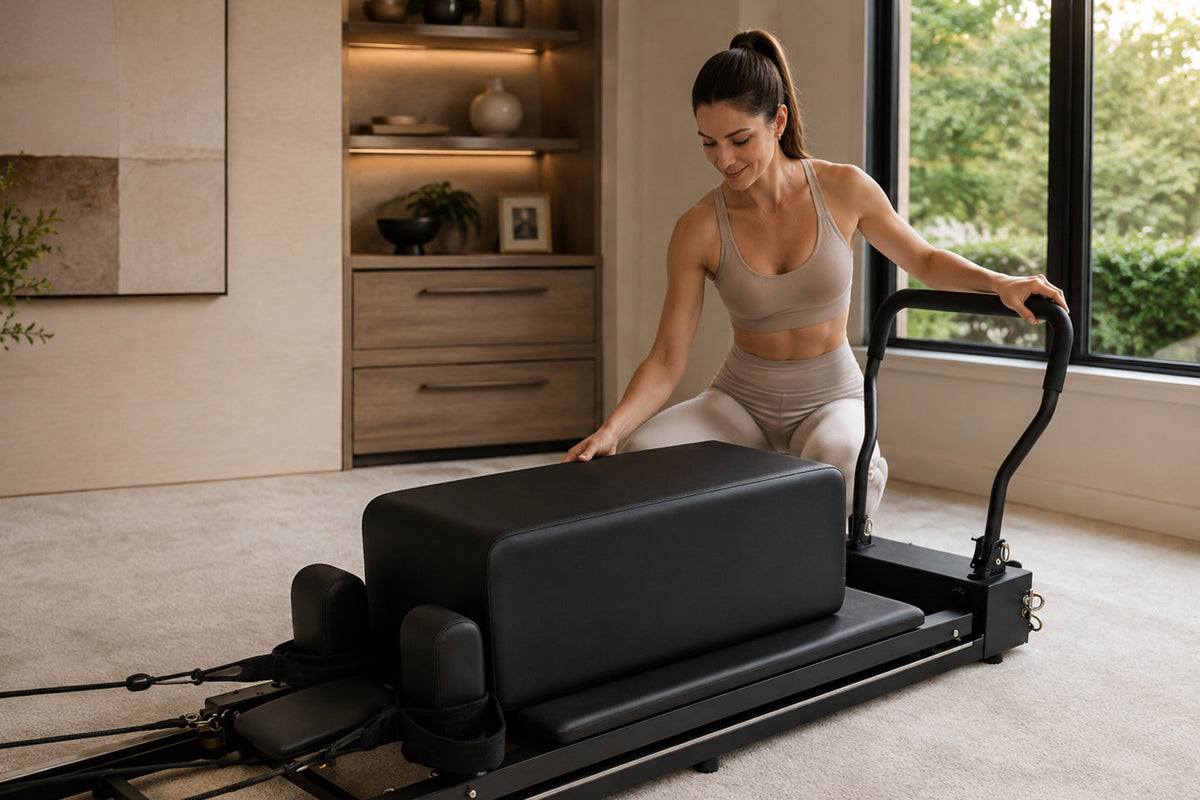
For apartments, multipurpose rooms, and homes where a workout area needs to disappear after use, a foldable reformer can be a practical answer. The goal is not to turn your living room into a commercial studio. It is to create a setup that is easy enough to use on an ordinary Tuesday.
Look for smooth carriage movement, stable construction, adjustable resistance, and a folding process you can manage comfortably. A reformer that is difficult to move or takes too long to store may create the same friction as a difficult commute. Home-friendly design should support your routine, not add a new project to it.
BeReform offers several foldable models for different home routines. The CORE Steel Foldable Reformer is a lightweight, compact option for beginners and smaller spaces. The FLOW Wooden Foldable Reformer combines a solid wood frame with manual folding for everyday home practice, while the PRIME Adjustable Wooden Reformer adds hydraulic-assisted folding and greater adjustability for more experienced users.
Who Benefits Most From a Home Reformer?
A home reformer is often a strong choice for people who already enjoy Pilates but struggle with studio schedules, those who want more weekly movement than a class package allows, and households where more than one person will use the equipment. It also works well for someone who values quiet, low-impact strength work and wants to pair Pilates with walking, yoga, or other fitness habits.
It may be less ideal if you are motivated mainly by the studio atmosphere, need close ongoing supervision, or have no suitable space for even a folded unit. In those cases, continuing with studio classes, or starting there first, is a sensible decision. There is no prize for exercising at home if the environment does not encourage you to show up.
A hybrid routine can offer the best of both
You do not need to choose one path forever. Many experienced Pilates fans keep a home reformer for frequent workouts and book studio sessions when they want a challenging class, a fresh sequence, or hands-on feedback. Others start with weekly studio instruction, then add short home sessions to reinforce what they learned.
This approach is especially useful when your schedule changes from season to season. A home reformer keeps your routine available during busy work periods, school breaks, travel-heavy months, or times when getting to a class simply is not realistic.
Choose the Routine You Can Return To
The best Pilates setup is not the one that looks most impressive on a schedule or in a spare room. It is the one that makes movement feel approachable enough to repeat. If studio guidance helps you feel strong and supported, make room for it. If a reformer at home lets you move with more ease, privacy, and flexibility, that investment can change the rhythm of your week.
Give yourself permission to choose based on your real life, then build a practice that is easy to come back to tomorrow.
Frequently Asked Questions
Is a home Pilates reformer worth it compared with studio classes?
A home reformer can be worthwhile if you plan to use it regularly and studio schedules, commuting, or ongoing class fees make consistency difficult. Studio classes may provide better value if you mainly want personal instruction, group energy, and real-time form corrections.
Should beginners take studio classes before buying a home reformer?
Studio instruction can be helpful for learning spring settings, carriage control, alignment, and safe transitions, but it is not the only way to begin. New users can also start at home with foundational videos or virtual instruction. Anyone managing an injury or medical concern should seek guidance from an appropriately qualified professional.
Can a home reformer completely replace studio Pilates classes?
It can for some experienced users, but it does not have to. A home reformer provides convenience and more opportunities to practice, while studio classes offer coaching and accountability. Many people find that a hybrid routine—regular home workouts plus occasional studio sessions—provides the best balance.
How much space do I need for a home Pilates reformer?
Measure the full open dimensions of the reformer and leave additional clearance around the carriage, footbar, and both sides of the machine. You also need to consider delivery access and the complete folding path. A foldable model can reduce the storage footprint, but it still requires enough open space for safe workouts.
Which BeReform model is best for home use?
The best choice depends on your experience, available space, and preferred frame style. The CORE suits beginners and smaller spaces, the FLOW is designed for most home users seeking wooden-frame stability and everyday comfort, and the PRIME suits more advanced users who want greater adjustability and hydraulic-assisted folding.