
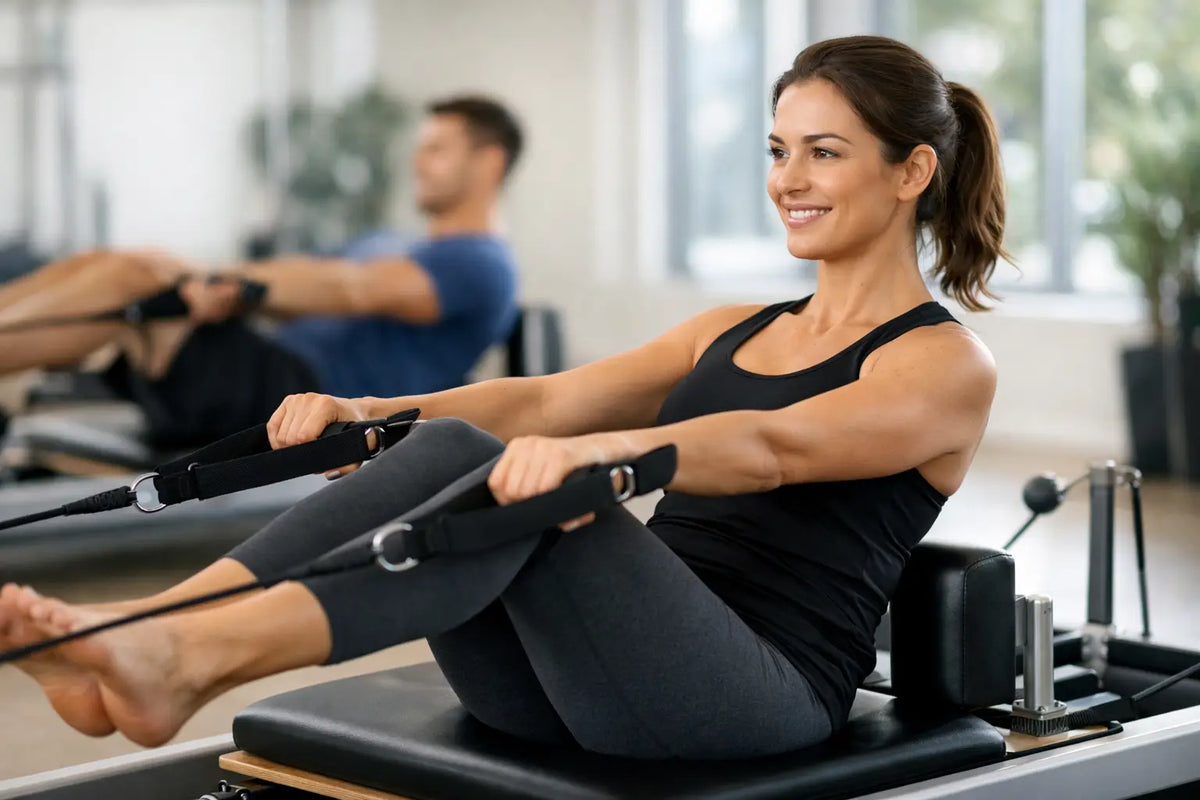
A reformer can change what a workout feels like at home. Instead of forcing yourself through a high-impact routine when time is tight, you can build strength, mobility, and body awareness in a way that feels controlled and repeatable. The Pilates reformer benefits that matter most are not about chasing exhaustion. They are about creating a routine you can realistically return to.
For busy professionals, parents, apartment dwellers, and former studio regulars, that consistency is often the real goal. A reformer brings the spring resistance, moving carriage, and versatile positions of studio Pilates into your own space, without the commute or pressure to make a class time.
Pilates Reformer Benefits That Support Daily Movement
A Pilates reformer uses a sliding carriage and adjustable springs to create resistance in both directions. You press, pull, stabilize, lengthen, and control the return. That last part matters: rather than dropping a weight or relying on momentum, you stay engaged through the full range of motion.
This gives reformer Pilates a distinct feel. A session can be gentle on the joints while still asking your muscles to work with precision. Springs can make some movements more supportive and others more challenging, depending on the exercise and setup. That versatility is one reason a reformer can suit someone learning the basics as well as someone with years of Pilates experience.
Strength without high-impact stress
Reformer Pilates builds functional strength by challenging muscles to stabilize, not just move. Your core works to keep your pelvis and rib cage organized while your legs, arms, glutes, and back move through controlled patterns. The result is often a deeper sense of connection to muscles that can get overlooked in faster workouts.
The moving carriage also creates useful resistance for lower-body work. Footwork can train the legs and glutes, while straps can add variety for the arms, upper back, and hips. You can increase spring tension when you want more challenge or choose a lighter setting to focus on control and range of motion.
Because there is no jumping required, reformer Pilates is a practical option for people who prefer low-impact exercise. Low impact does not automatically mean easy, though. A slow, well-controlled sequence can be surprisingly demanding, especially when you are learning to keep the body steady.
Improved mobility with more support
Mobility is not just about stretching farther. It is the ability to move a joint with control and strength. The reformer supports this work by giving you a stable surface, adjustable resistance, and multiple body positions to explore movement gradually.
For example, the footbar and carriage can help you work through hip and ankle movement without needing to balance on one leg right away. Straps can support shoulder mobility while encouraging better control through the upper back. For people who spend long hours at a desk, these movements can be a welcome counterpoint to sitting in the same position all day.
Your results depend on your starting point, form, and frequency. A reformer is not a quick fix for stiffness or pain, and discomfort should never be pushed through. But a regular practice can make it easier to notice where your body feels restricted and build more comfortable movement over time.
Better posture awareness, not rigid posture rules
Pilates is often associated with posture, but the goal is not to hold yourself stiffly all day. It is to become more aware of how you stack, support, and move your body. Reformer exercises encourage coordination between the breath, core, hips, shoulders, and spine.
That awareness can carry into everyday tasks. You may notice how you sit at your desk, carry groceries, reach for something overhead, or stand after a long drive. The benefit is less about looking perfectly upright and more about having options: the ability to adjust your position before tension builds.
Why a Home Reformer Makes Consistency Easier
The best workout is usually the one that fits into your life often enough to make a difference. Studio classes offer valuable instruction and community, but they also require travel, scheduling, and ongoing class fees. A home reformer removes several of those barriers.
You can move for 20 minutes before work, take a mobility-focused break between meetings, or fit in a longer session after the kids are asleep. That flexibility can make a bigger difference than having an overly ambitious plan you rarely have time to follow.
A home setup also lets you choose the pace. Some days call for a challenging full-body workout. Other days, gentle footwork, hip mobility, and light arm work may be exactly what you need. The reformer adapts well to both, which helps turn movement into a steady part of your week rather than an all-or-nothing commitment.
A full-body workout in a compact routine
One reason reformers feel efficient is that many exercises involve multiple areas at once. A leg exercise may also require core control. An arm sequence may challenge shoulder stability and posture. You can train strength, balance, coordination, and mobility in one session without setting up several pieces of equipment.
That said, a reformer does not have to replace every kind of movement you enjoy. Walking, cycling, strength training, yoga, and outdoor activity can all complement a Pilates practice. It depends on your goals. If you want maximum heavy-load strength, traditional weight training may still have a place in your routine. If you want an adaptable, low-impact training method that supports whole-body control, the reformer is especially compelling.
Choosing a Reformer That Works in a Real Home
The practical side of Pilates reformer benefits starts with choosing equipment you will actually use. A beautiful machine is not helpful if it blocks a hallway, feels intimidating to set up, or becomes a place to stack laundry.
Before buying, think about where the reformer will live when it is open and when it is stored. Measure the room, including clearance around the carriage and space to move comfortably. If you share your home or live in a smaller space, a foldable design can be a meaningful advantage. Being able to fold and roll a reformer away helps preserve the room for daily life.
Pay attention to carriage movement, spring options, frame stability, and adjustability. Beginners may appreciate clear setup and supportive spring choices, while more experienced users may want more resistance levels, adjustable rails, and a longer carriage travel. Quiet operation can also matter if you exercise early, live in an apartment, or simply want workouts that feel calmer.
A quality home reformer is an investment, so reassurance matters. Look for clear weight and size specifications, dependable construction, safety information, a practical warranty, and delivery support that makes the purchase feel manageable. BeReform offers several foldable models for different home routines: the CORE Steel Foldable Reformer is a compact option for beginners and smaller spaces, the FLOW Wooden Foldable Reformer balances everyday comfort with the stability of a solid wood frame, and the PRIME Adjustable Wooden Foldable Reformer adds hydraulic-assisted folding and greater adjustability for more advanced home practice.
Getting More From Your Reformer Practice
You do not need to begin with advanced exercises to feel progress. Start with fundamental movements that help you understand the carriage, springs, footbar, and straps. Learn how the machine responds before increasing resistance or adding more complex sequences.
A consistent schedule is more useful than occasional marathon workouts. Two or three sessions each week can be a solid starting point, especially if you mix a strength-focused day with a mobility-focused day. As your confidence grows, you can add short sessions on the days when you need to reset, stretch, or move after sitting.
If you are new to Pilates, guided videos or instruction from a qualified teacher can help you build good habits. This is especially useful if you have an injury history, are returning to exercise after time away, or are unsure how to adjust springs safely. The right amount of challenge should leave you feeling worked, not strained.
A reformer earns its place at home when it makes movement feel less like another appointment and more like a supportive part of your day. Give yourself room to learn, choose a setup that fits your space, and let a few quiet, well-controlled sessions each week become a routine you look forward to.