
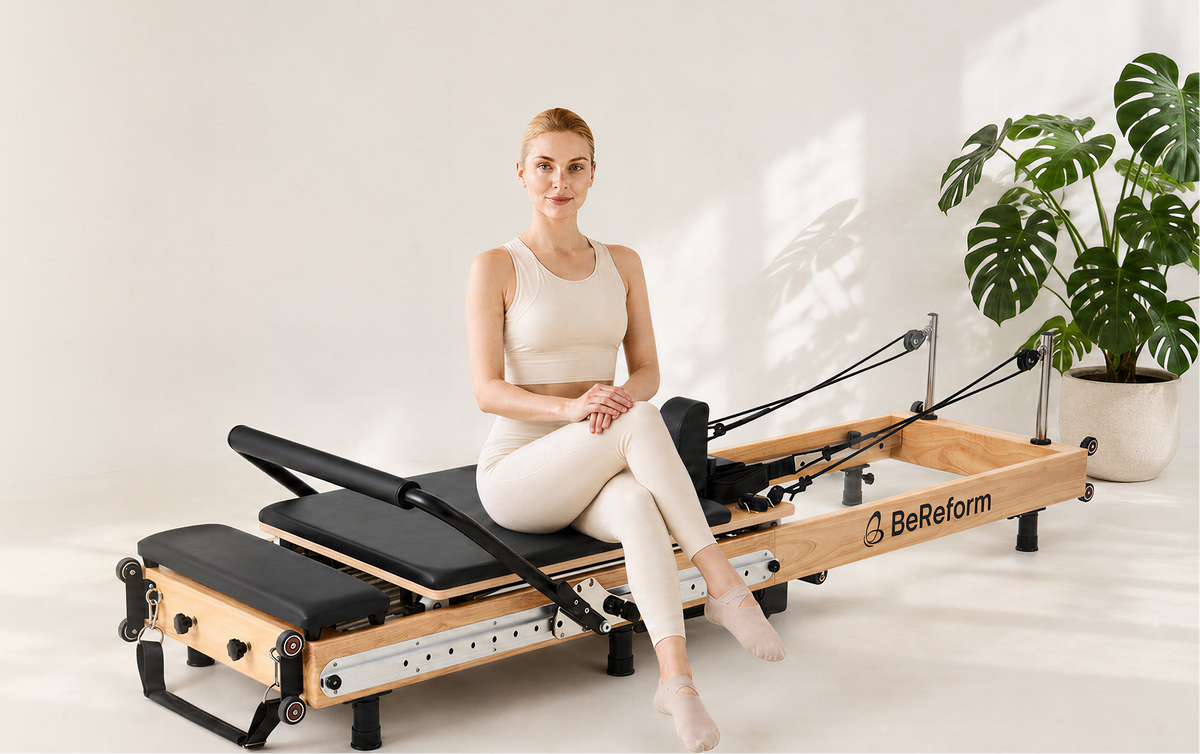
A reformer can replace the part of your week that disappears into class schedules, traffic, and last-minute cancellations. But before it earns a place in your bedroom, living room, or dedicated workout corner, the practical question is simple: what is a realistic Pilates reformer cost for home use?
The answer depends on more than the price tag. A lower-priced machine may be a smart first step for occasional movement, while a more refined folding model can make daily Pilates feel easier to maintain for years. The best value is the reformer that fits your body, your space, and the routine you actually want to keep.
Pilates reformer cost at a glance
For a home reformer, most shoppers can expect a wide range of prices. Entry-level models generally begin around $300 to $700. These can be appealing for trying reformer-style exercise at home, but they may have shorter frames, lighter materials, fewer adjustment options, or a carriage feel that is less suited to frequent use.
A dependable mid-range home reformer often falls between $800 and $1,800. This is where many buyers find the balance they want: smoother carriage movement, stronger construction, adjustable resistance, more comfortable padding, and a design made to live in a real home rather than dominate it. Foldable models are especially valuable in this category because they help preserve open floor space after a workout. BeReform’s home Pilates reformer collection includes steel and wooden folding options designed for different budgets, spaces, and levels of experience.
Premium home and studio-inspired reformers commonly range from $1,800 to $3,500 or more. The higher cost may reflect a solid wood or reinforced steel frame, upgraded rails and springs, a larger carriage, more advanced adjustability, and a finish that looks considered in a wellness-focused space. Commercial studio equipment can cost well beyond that range, although it is not always necessary for a household routine.
Price alone does not tell the whole story. A $600 reformer used twice and stored in frustration is more expensive than a $1,400 machine that supports four enjoyable workouts every week.
What changes the cost of a Pilates reformer?
Frame materials and everyday stability
The frame is one of the clearest reasons reformer prices vary. Lighter equipment is easier to move and can cost less, but it may feel less planted during lunges, planks, and standing work. A well-built steel or wood frame typically offers more stability and a more substantial feel under regular use.
Neither material is automatically better. Steel can suit shoppers who prioritize strength, easy care, and a streamlined look. Wood brings a warm, studio-inspired presence to a room. What matters is the quality of the construction, the machine's weight capacity, and whether it feels secure through the movements you plan to do most.
Folding design and storage convenience
A traditional reformer takes up meaningful floor space even when no one is using it. For apartment dwellers, parents sharing common spaces, and anyone who wants a calmer home environment, folding capability is not a small extra. It can be the feature that makes ownership work.
Manual folding systems usually cost less than hydraulic or assisted designs. That does not make them a poor choice, but consider how often you will fold and unfold the machine. If setup feels heavy, awkward, or time-consuming, it creates one more reason to skip a session. A well-designed folding reformer should make it realistic to move from stored to ready without turning your workout into a project.
For example, the BeReform FLOW offers a manual-folding wooden design for regular home workouts, while the BeReform PRIME adds hydraulic-assisted folding and greater adjustability for buyers seeking a more advanced home setup.
Carriage movement, resistance, and adjustability
The quiet glide of the carriage is part of what makes reformer Pilates feel so satisfying. Better wheels, rails, bearings, and alignment often increase the cost, yet they also shape the experience every time you train. Smooth movement helps you focus on control instead of compensating for a jerky or noisy machine.
Resistance systems matter, too. Springs or adjustable resistance settings give you room to progress from mobility work to more challenging strength-focused sessions. Look at the range of resistance, how straightforward adjustments are, and whether the setup can support different users in the household. A beginner may want clear, approachable settings; an experienced Pilates regular may need more options to keep training interesting.
Included accessories and the complete setup
Some reformers arrive with a basic configuration, while others include items such as a jump board, box, platform extender, straps, or additional resistance options. Accessories can add to the upfront Pilates reformer cost, but buying a more complete package can be less expensive than piecing it together later.
Only pay for accessories that match your goals. A box may add useful variety for seated, prone, and standing exercises. A jump board can be great for low-impact cardio. If you are primarily looking for gentle mobility and foundational Pilates, a simpler configuration may be exactly right.
Compare the purchase with the cost of studio classes
A home reformer is a larger initial purchase than a mat, but it can change the math of a studio routine. In many US cities, a single reformer class can cost roughly $25 to $45, with packages and memberships varying widely. At two classes per week, that may be $200 to $360 a month before transportation, missed classes, or childcare considerations.
That does not mean home Pilates replaces the value of an excellent instructor. Studio classes offer hands-on cues, community, and a dedicated space to focus. For some people, a hybrid approach is ideal: learn form in class, then build consistency at home. Others prefer the freedom to exercise for 20 minutes between meetings or after the kids are asleep.
When assessing a reformer purchase, think in terms of use over time. A $1,200 reformer used three times a week for three years works out to far less per session than a continuing studio membership. The real return is not just financial. It is having movement available when your schedule allows it.
How to choose the right price range for your home
Start with your space rather than the biggest feature list. Measure the area where you will use the reformer, then measure the route it must travel through—hallways, doorways, stairs, and storage areas included. Leave enough room around the machine to move comfortably and safely. A compact folding design can be a better investment than a larger reformer that permanently crowds your room.
Next, be honest about frequency. If you are curious about Pilates but unsure whether reformer workouts will become part of your routine, an entry-level option may be appropriate. If you already attend studio classes, want low-impact strength work at home, or plan to share the reformer with a partner, it makes sense to prioritize build quality, smooth movement, and adjustability.
Also consider the buying experience. Shipping costs, warranty coverage, return policies, replacement part availability, and payment options all affect the true cost. Free US shipping and a meaningful warranty can provide more confidence than a lower sticker price with little support behind it. BeReform Pilates reformers, for example, are designed for home use and include free US shipping, three-year warranty protection, 30-day returns, and flexible payment options, helping buyers weigh daily usability alongside the initial investment.
Where it makes sense to spend more
There are a few areas where stretching the budget can be worthwhile: a stable frame, smooth and quiet carriage travel, comfortable cushioning, adjustable resistance, and a folding mechanism you will genuinely use. These are the details that shape every workout, not just the first week after delivery.
It may be less necessary to pay extra for features that do not fit your habits. A long list of attachments is not valuable if you prefer simple sessions. A commercial-sized reformer may be excessive if you need equipment that can tuck away after use. Choose for your normal Tuesday evening, not an imagined perfect routine.
A reformer should make movement feel more available, not add another complicated object to manage. Set a budget that protects the features you will notice every day, choose a size that lets your home breathe, and give yourself a setup you will be happy to return to tomorrow.