
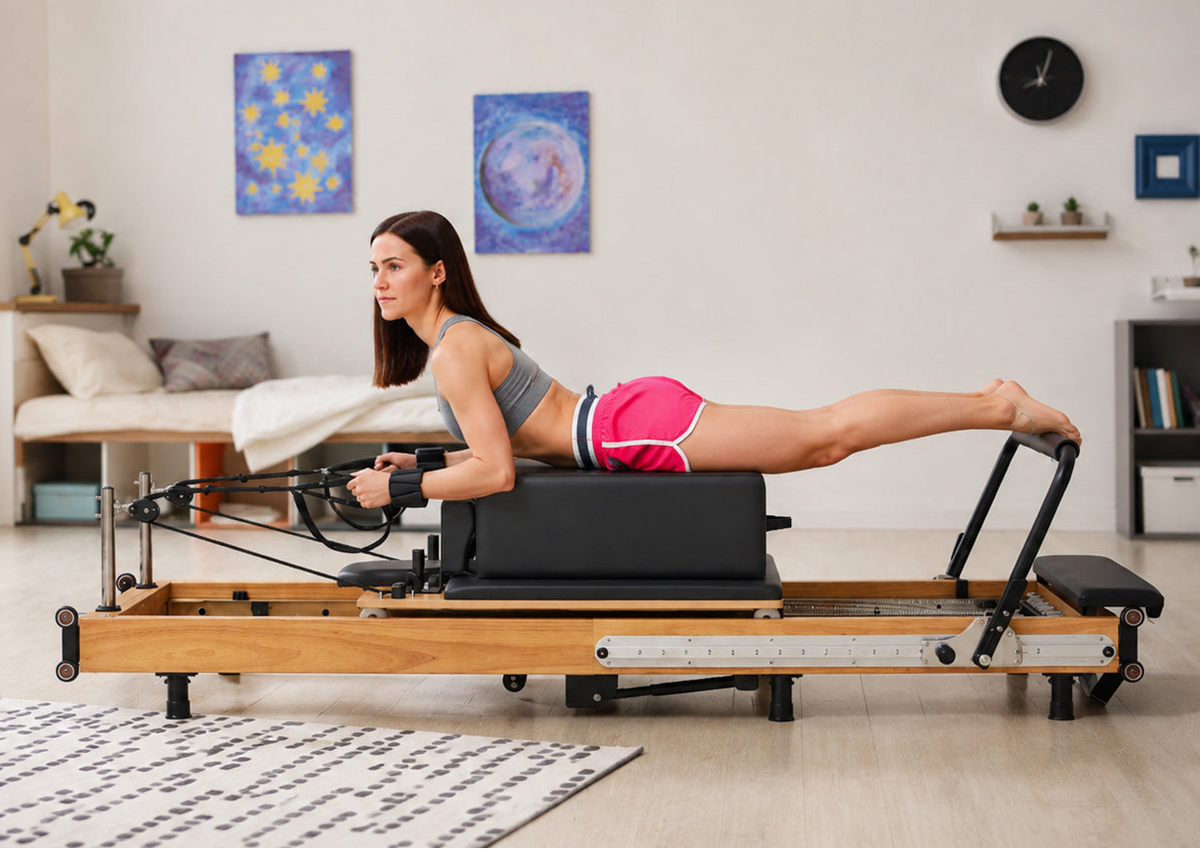
A reformer should make your routine feel more supported, not leave you wondering whether the frame, carriage, or folding mechanism is being pushed too far. This Pilates reformer weight capacity guide helps you look beyond a single number so you can choose equipment that feels stable, comfortable, and ready for regular use at home.
For many shoppers, weight capacity is a quick safety check. It is also a durability and comfort consideration, especially if more than one person will use the reformer. The right choice gives you room to move with confidence, whether you are starting Pilates for the first time, returning from studio classes, or adding low-impact strength work to a busy week.
What Pilates reformer weight capacity actually means
A reformer’s weight capacity is the maximum body weight the manufacturer states the equipment can safely support during normal, intended use. It reflects how the frame, carriage, rails, springs, ropes, footbar, and supporting hardware work together under load.
That number is not a score for your fitness level, nor is it a suggestion that the reformer will feel identical for every user below the limit. A person close to a machine’s stated capacity may still prefer a higher-capacity model for a more planted feel during kneeling work, side-lying exercises, transitions, and stronger spring settings.
Always use the manufacturer’s published capacity for the exact model you are considering. Do not assume that two reformers with a similar appearance, frame material, or price point have the same rating. Folding designs, carriage dimensions, construction details, and intended use can vary significantly.
User weight versus total load
The phrase “weight capacity” can occasionally be used differently across fitness equipment. For a Pilates reformer, it usually refers to the person using it. But product documentation may distinguish between user weight, moving load, or a broader total load rating.
Accessories such as a jumpboard, platform extender, box, or tower attachment can change how force is distributed during an exercise. Dynamic movements create more force than simply sitting or lying on the carriage, too. This is why the product manual and the model-specific specification should always be the final word, rather than a general capacity range you saw elsewhere.
How much capacity should you choose?
The best answer is simple: choose a reformer rated above the body weight of its heaviest intended user, with enough margin to support comfortable, consistent movement. There is no universal extra number that fits every design, but more headroom can be reassuring for shared households, frequent workouts, and users who want a sturdier feel.
If you are well below a reformer’s published limit and plan to use it for controlled Pilates fundamentals, a compact home model may be an excellent fit. If you are near the listed maximum, use the reformer daily, enjoy athletic jumpboard sessions, or expect multiple adults to share it, it may be worth considering a model with a higher rating and a more substantial frame.
For example, the BeReform CORE Steel Foldable Reformer supports a maximum user weight of 220 lbs and is designed for beginners and compact home spaces. For shared households or users who prefer a higher-capacity wooden frame, the BeReform FLOW and BeReform PRIME support up to 551 lbs.
Capacity is only one part of the decision. A reformer that supports your weight on paper still needs to fit your body and your movement style. Carriage length, rail height, footbar adjustment, shoulder rests, and overall stability all shape how secure the machine feels.
A practical Pilates reformer weight capacity guide for your home
Start with the most straightforward question: who will use the reformer? If it is only for you, compare your body weight to the manufacturer’s stated limit and look for a comfortable buffer. If your partner, teenager, visiting family, or a roommate may use it as well, shop for the heaviest regular user rather than the person placing the order.
Next, think about the kind of routine you want to maintain. Gentle mobility work and classical mat-to-reformer fundamentals place different demands on equipment than faster transitions, standing balance work, or jumping. Neither approach is better. The goal is to choose a reformer that matches the way you will actually move, not the workouts you imagine doing once in a while.
Your home setup matters just as much. A reformer should sit on a level, stable surface with enough clear room around it for getting on and off safely. Thick, soft carpet can affect how planted a machine feels, while uneven flooring can make any frame seem less stable. A suitable floor mat may help protect hard flooring and keep the training area more defined, but it does not replace proper placement or assembly.
For foldable reformers, check both the in-use and stored positions. A convenient folding system makes it easier to keep a Pilates practice going in an apartment, bedroom, or shared living space. Still, the reformer should always be fully opened, locked according to its instructions, and inspected before use. Never exercise when a folding mechanism is partially engaged or a lock is not secure.
Stability matters as much as the number
A high weight capacity can be a positive sign, but it does not tell the whole story. Stability comes from the complete design: the base footprint, frame construction, carriage travel, wheel system, hardware quality, and how securely each adjustable part locks into place.
Pay attention to the feel you want from the carriage. Smooth movement is not just a luxury. A carriage that travels evenly helps you focus on breath, alignment, and control instead of compensating for sticking or wobbling. This matters for beginners who are building confidence and for experienced users who want their home routine to feel closer to a studio session.
A longer carriage may also be valuable for taller users, even when capacity is not a concern. If your knees, shoulders, or feet feel cramped, you may alter your positioning to make the exercise work. That can take away from the calm, controlled experience Pilates is known for.
Do not overlook springs and adjustable parts
It is tempting to judge a reformer by the frame alone, but springs and adjustable components deserve the same attention. Springs create resistance. They are not meant to make a reformer “strong enough” for a certain body weight, and adding more spring tension is not a substitute for choosing equipment with an appropriate capacity.
Use the spring settings recommended for each movement and progress gradually. Stronger springs can offer more support in some exercises and more challenge in others, depending on the setup. If you are new to reformer Pilates, beginning with guided classes or a qualified instructor can help you learn safe spring choices and carriage control.
Before each session, take a quick look at the springs, clips, ropes, straps, carriage, footbar, shoulder rests, and folding locks. Stop using the reformer if you notice fraying, cracking, loose hardware, unusual noises, damaged upholstery, or movement that no longer feels smooth. Regular care protects both the equipment and the ease of your routine.
Common mistakes when comparing capacity
The first mistake is buying based on the highest number alone. A large capacity rating is helpful, but it should be paired with a design that suits your height, available space, desired features, and preferred style of movement.
The second is treating a stated maximum as a target. Capacity is a safety boundary, not a performance goal. Choosing a reformer with room above your needs can make everyday sessions feel more reassuring, particularly when you are working on balance or getting accustomed to the moving carriage.
The third is overlooking household use. A compact, beautifully designed reformer may be perfect for one person but less practical when several adults with different body sizes and fitness goals plan to use it. Thinking through that shared use before purchase can prevent an expensive mismatch later.
Finally, do not skip the manual after delivery. Follow the assembly instructions, use the recommended hardware checks, and honor any guidance related to folding, storage, accessories, and maintenance. A three-year warranty can provide useful purchase reassurance, but careful setup and routine care are what help equipment stay dependable day after day.
A well-chosen reformer becomes part of the room and part of your rhythm: open it, move for twenty minutes or an hour, then get on with the rest of your day. Choose capacity with care, give yourself a little margin, and let your home Pilates practice feel like a steady place to return to.
Frequently Asked Questions
What weight capacity should I look for in a home Pilates reformer?
Choose a reformer with a published weight capacity above the body weight of its heaviest intended user. Leaving some additional capacity can provide a more reassuring and stable experience, particularly for frequent workouts, standing exercises, and shared household use.
Can I use a Pilates reformer if my weight is close to its maximum capacity?
You should always remain within the manufacturer’s stated maximum user weight. However, if your weight is close to that limit, a higher-capacity reformer may feel more stable and provide greater confidence during transitions, kneeling exercises, and stronger resistance work.
Does a higher weight capacity mean the reformer is more stable?
Not necessarily. Weight capacity is important, but stability also depends on the frame construction, base footprint, carriage system, hardware, and how securely adjustable components lock into place. Consider the complete design rather than choosing based on the highest number alone.
Are foldable Pilates reformers safe for heavier users?
A foldable reformer can be safe when the user remains within its published weight limit and the machine is fully opened and locked before exercise. Always follow the manufacturer’s setup instructions and inspect the folding mechanism, locks, frame, and hardware regularly.
What are the weight capacities of BeReform Pilates reformers?
The BeReform CORE Steel Foldable Reformer supports a maximum user weight of 220 lbs. The wooden BeReform FLOW and BeReform PRIME support up to 551 lbs, making them suitable for shared households and users who prefer a higher-capacity frame.